
Choosing a reliable 0.5 Ml Lip Filler supplier requires more than comparing prices or reviewing attractive product photos. Clinics need evidence, traceability, and dependable communication. The right supplier should clearly identify the manufacturer, formulation, batch number, expiry date, storage conditions, and intended clinical use. Independent quality documentation matters. So does transparent regulatory information for each destination market.
Dr. Raj Acquilla, an aesthetic physician and international trainer, offers a practical principle: “Safety must come before every aesthetic goal.” This idea should guide every supplier evaluation. Ask whether the product is supported by published clinical evidence and manufactured under recognized quality systems. Confirm that packaging arrives sealed, legible, and undamaged. A temperature-sensitive shipment should include documented handling procedures, not vague promises.
Look closely at the details. Is the 0.5 Ml Lip Filler supplied through an authorized channel? Can the supplier verify product authenticity within minutes? Does customer support answer technical questions with qualified information? These points reveal operational maturity. They also protect patient trust.
However, supplier selection is rarely perfect. A familiar brand may still have weak logistics. A low-cost option may create expensive delays. Marketing language can sound professional while avoiding important evidence. That deserves reflection. Clinics should compare several suppliers, involve trained medical professionals, and maintain written purchasing records. Requirements also vary by country, so local licensing and healthcare regulations must be checked before any order.
A strong supplier is not simply the cheapest or most visible. It is the one that consistently connects product quality, clinical responsibility, and accountable service. Safety is never a shortcut.
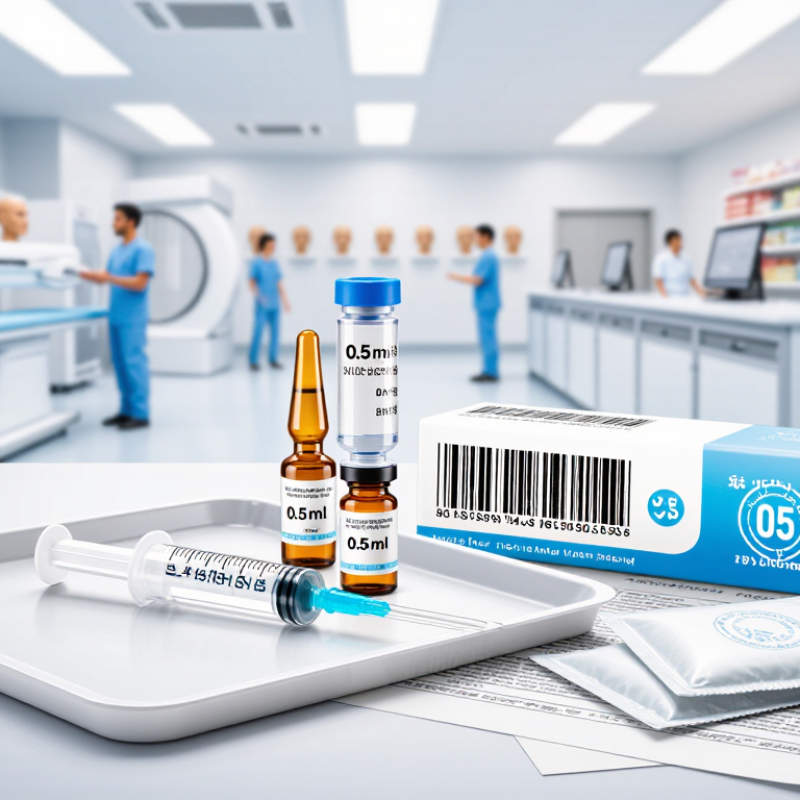
A 0.5 ml lip filler is a small-volume hyaluronic acid gel designed for controlled correction. It may soften fine lines, define the vermilion border, or improve mild asymmetry. Many first-time patients choose it for a restrained change. The result depends on anatomy, injection depth, product elasticity, and clinical technique. Small does not mean risk-free.
The American Society of Plastic Surgeons reported 1,449,320 hyaluronic acid filler procedures in the United States in 2023. The ISAPS Global Survey 2023 also recorded more than 6.3 million non-surgical aesthetic procedures worldwide. These figures show strong demand, but they do not prove that every 0.5 ml product suits lip tissue. Market numbers can hide important differences. That deserves reflection.
When evaluating global suppliers, qualified clinics should verify the product’s intended use, ingredient concentration, sterility documentation, lot number, expiry date, and regulatory status in the destination market. Packaging should remain sealed and traceable. Clear instructions for storage and adverse-event reporting also matter. The supplier should provide professional documentation, not vague marketing language.
A 0.5 ml syringe can support precision, but it cannot replace individual assessment. Lips vary greatly. Evidence from the Aesthetic Surgery Education and Research Foundation emphasizes careful anatomical planning and conservative injection practices, especially in highly vascular areas. Suppliers should therefore support trained medical professionals, transparent quality systems, and post-market monitoring. Data is useful, not perfect.
How to Choose 0.5 Ml Lip Filler Suppliers Globally?
A reliable 0.5 ml lip filler supplier must prove more than attractive packaging. Ask for a valid quality-management certificate, such as ISO 13485:2016, and documented manufacturing controls. The supplier should provide batch numbers, certificates of analysis, sterility results, endotoxin limits, and complete traceability records. These documents should match the physical syringe, carton, and shipment. A polished brochure is not evidence.
Product quality also depends on formulation details. Request the hyaluronic acid concentration, cross-linking method, particle profile, pH, osmolarity, and rheological data. The 0.5 ml volume only describes the fill size. It does not confirm safety, tissue behavior, or injection performance. Check needle integrity, syringe sealing, labeling, storage temperatures, and transport monitoring. The International Society of Aesthetic Plastic Surgery reported more than 5.5 million hyaluronic acid procedures in its 2023 Global Survey, showing why consistent manufacturing matters across markets.
Supplier qualification should include regulatory evidence for each destination. Requirements differ between the European Union, the United States, and other jurisdictions. Verify market authorization, authorized claims, post-market surveillance, complaint handling, and recall procedures. Do not rely only on a distributor’s promise. Ask for an audit trail and recent inspection information. I would also compare three production batches, not one. Variation can be easy to miss. My checklist may still overlook human error, especially during international cold-chain transfers. That uncertainty deserves honest review.
Supplier qualification and product quality priorities for international procurement of sterile hyaluronic-acid lip fillers.
This chart presents a practical 100-point screening framework rather than company-specific market data. The highest weight is assigned to regulatory compliance, sterility, traceability, and biocompatibility because injectable products require documented evidence in these areas. Buyers should verify the applicable requirements of the destination market before placing an order.
Choosing a 0.5 ml lip filler supplier globally requires more than comparing prices. The small volume does not reduce safety expectations. Start by checking the product’s legal status in each target market. Confirm that the supplier holds valid manufacturing and distribution permissions. Ask for certificates issued by recognized authorities, not self-designed documents. Registration numbers should match official public databases. Verify the product name, formulation, intended use, and expiry details. Regulations differ widely. A document accepted in one country may carry little weight elsewhere.
Request evidence of a quality system, such as ISO 13485 certification where relevant. Review batch records, sterility controls, raw material traceability, and storage conditions. A reliable manufacturer should explain how 0.5 ml syringes are filled, sealed, labeled, and inspected. Ask for recent certificates of analysis and independent testing reports. Check whether complaints, recalls, and adverse events are documented transparently. Factory audits can reveal practical weaknesses, including poor temperature monitoring or crowded cleanroom procedures. Paperwork can look perfect. Reality may not.
Tips: Compare certificate details with regulator databases. Request a video audit or qualified third-party inspection. Confirm storage and transport responsibilities in writing. Keep samples and records for every batch. If answers remain vague, pause the purchase. I have learned that speed often hides gaps, although cautious review can also delay a legitimate order.
| Market or Region | Typical Regulatory Position for Injectable Lip Fillers | Key Documents to Request | Manufacturing and Quality Evidence | Supplier Verification Points | Important Compliance Note |
|---|---|---|---|---|---|
| United States | Injectable dermal fillers are regulated by the U.S. Food and Drug Administration as medical devices. Many products are Class III devices and generally require Premarket Approval, depending on the product, formulation, and intended use. | FDA clearance or approval information Product labeling Intended-use statement Adverse-event and complaint procedures | Evidence of a quality management system aligned with 21 CFR Part 820 and, where applicable, ISO 13485. Request biocompatibility, sterility, shelf-life, packaging-integrity, and lot-release records. | Confirm that the exact product, concentration, injection area, and intended use match the applicable FDA authorization. Verify lot numbers, UDI information where applicable, and traceability from raw material to finished product. | A general “FDA registered” statement is not the same as product approval or clearance. |
| European Union / EEA | Injectable dermal fillers without a medicinal action are generally treated as high-risk medical devices under the EU Medical Device Regulation, with classification depending on the product design and intended purpose. | EU Declaration of Conformity CE certificate from a notified body Technical documentation summary UDI and labeling data | Look for an ISO 13485 quality system, risk management under ISO 14971, biological evaluation under the ISO 10993 series, validated sterilization, and documented post-market surveillance. | Check the notified body number, certificate scope, certificate validity, product family, sterile status, and intended use. Confirm that the notified body is designated for the relevant medical-device conformity-assessment activity. | CE marking alone is insufficient if the certificate scope does not cover injectable dermal fillers or if the certificate has expired. |
| United Kingdom | Medical devices and injectable aesthetic products are overseen by the Medicines and Healthcare products Regulatory Agency. Market access may involve UKCA requirements or recognition of CE-marked devices under current transitional rules. | UKCA or accepted CE documentation UK Responsible Person details MHRA registration evidence Current product labeling | Request ISO 13485 certification, validated sterilization and packaging processes, clinical evaluation, risk-management files, and complaint or vigilance procedures. | Confirm the applicable market route for the delivery date, the identity of the legal manufacturer, the UK Responsible Person where required, and the consistency of packaging, certificates, and product specifications. | UK market requirements and CE recognition timelines can change; verify the current MHRA rules before importation. |
| Canada | Injectable dermal fillers are regulated as medical devices by Health Canada. The device class depends on the product’s risk profile, duration of contact, materials, and intended use; injectable fillers commonly require a higher-risk licensing pathway. | Medical Device Licence Medical Device Establishment Licence, where applicable Bilingual labeling Product and manufacturer information | Ask for ISO 13485 certification, evidence of sterilization validation, biocompatibility testing, stability data, packaging validation, and documented complaint handling. | Confirm that the licence covers the exact product and manufacturer, not merely a similar product category. Review the importer or distributor’s authorization and recall procedures. | A quality certificate does not replace the required Health Canada product licence. |
| Australia | Injectable dermal fillers are generally regulated as medical devices and may require inclusion in the Australian Register of Therapeutic Goods before lawful supply. | ARTG inclusion details Sponsor information Conformity-assessment evidence Australian labeling | Request ISO 13485 certification, biological-safety evidence, clinical evaluation, sterility and shelf-life data, packaging integrity results, and post-market monitoring procedures. | Match the ARTG entry with the exact manufacturer, product description, intended purpose, sterile presentation, and package size. Confirm that the local sponsor is identifiable and active. | Registration of a supplier or facility does not automatically establish authorization for every product it manufactures. |
| Japan | Injectable aesthetic devices are regulated under Japan’s Pharmaceuticals and Medical Devices framework. The required approval or certification route depends on device classification, materials, intended purpose, and risk. | Marketing authorization or certification evidence Japanese labeling Local authorization-holder details Clinical and safety documentation | Review quality-system compliance, design controls, sterilization validation, biological evaluation, stability testing, and manufacturing-site information suitable for the Japanese regulatory pathway. | Verify the Japanese authorization holder, exact product name and formulation, approved indications, package configuration, and whether the supplied product is intended for the Japanese market. | Approval in another jurisdiction does not automatically authorize sale or clinical use in Japan. |
| China | Injectable dermal fillers are generally managed as higher-risk medical devices by the National Medical Products Administration. Classification and registration requirements depend on composition, intended use, and product design. | NMPA registration or filing information Chinese instructions for use Product technical requirements Local agent details | Request quality-system evidence, raw-material specifications, biological-safety evaluation, sterility validation, stability data, packaging testing, and batch-release procedures. | Check the registration certificate, product technical requirements, registered manufacturer, registered formulation, package size, and whether the proposed 0.5 mL configuration is covered. | A product registered for export or in another country may still require separate NMPA authorization for mainland China. |
| Brazil | Injectable dermal fillers are regulated by the Brazilian health authority and may require registration according to their risk classification, composition, and intended use. | ANVISA registration information Brazilian Portuguese labeling Local registration-holder details Import documentation | Review ISO 13485 evidence, sterilization and packaging validation, biocompatibility data, stability studies, clinical evidence, and traceability procedures. | Confirm that the registration covers the exact formulation, volume, sterile presentation, manufacturer, and intended use. Review local storage and transport controls. | Local regulatory representation and Portuguese labeling may be required even when the product has approval elsewhere. |
| International Quality Baseline | International standards do not themselves authorize market access, but they provide a useful framework for comparing supplier quality systems and manufacturing controls. | ISO 13485 ISO 14971 ISO 10993 series ISO 11135 or ISO 11137 ISO 11607 | Evaluate controlled cleanroom operations, validated aseptic or terminal-sterilization processes, environmental monitoring, calibrated equipment, water-quality control, supplier qualification, deviation management, and corrective actions. | Verify the certificate issuer, certificate number, scope, manufacturing site, expiry date, and whether the certificate is independently verifiable. Request a recent audit summary or non-confidential quality-system overview. | Prefer evidence tied to the actual production site rather than a certificate issued only to a trading or sales entity. |
| Product-Specific Due Diligence | A 0.5 mL package is a package-volume specification, not a universal safety or regulatory category. Suitability depends on formulation, concentration, cross-linking technology, excipients, injection depth, anatomical indication, and intended user. | Full ingredient list Certificate of Analysis Sterility certificate Shelf-life and storage data Batch records | Check hyaluronic-acid source and characterization, residual cross-linker limits, endotoxin testing, particulate control, pH and osmolality specifications, fill-volume tolerance, container-closure integrity, and lot-release acceptance criteria. | Compare the Certificate of Analysis with independent laboratory results where appropriate. Confirm that lot numbers, expiry dates, storage conditions, syringe or needle configuration, and tamper-evident packaging are consistent. | Do not purchase solely on price, claimed purity, or a generic “medical-grade” description without product-specific evidence. |
| Supplier Red Flags | Warning signs include unverifiable certificates, inconsistent manufacturer names, missing lot traceability, unclear intended use, unexplained formulation changes, inadequate storage controls, and pressure to bypass local registration. | Certificate verification result Supplier audit report Recall history Complaint trend Supply continuity plan | Investigate repeated deviations, failed sterility tests, unexplained temperature excursions, incomplete environmental-monitoring records, and weak change-control procedures. | Use a documented qualification process: regulatory review, quality audit, sample evaluation, independent testing where justified, written specifications, quality agreement, and periodic reassessment. | Stop qualification if the supplier refuses to disclose the legal manufacturer, production site, regulatory status, or traceability information. |
When comparing global 0.5 ml lip filler suppliers, separate unit price from landed cost. IMARC Group estimated the global dermal fillers market at about US$5.5 billion in 2023, but market growth does not guarantee fair quotations. Request prices at 100, 500, and 1,000 units. Include product cost, export documents, insurance, customs fees, and temperature-controlled shipping when required. A low quotation can become expensive after clearance.
Packaging needs careful checking. Ask for photographs of the carton, syringe, needle, seal, lot number, expiry date, and storage instructions. ISO 11607 is relevant to sterile-barrier packaging, where applicable. Confirm whether each 0.5 ml syringe has tamper evidence and traceability. Small details matter. I would not accept vague claims such as “medical grade” without certificates, test methods, and issuing laboratories.
Logistics and minimum order terms can expose hidden risk. WHO good distribution practice guidance emphasizes documented storage, transport, and supplier qualification. Confirm dispatch time, temperature records, damage procedures, and replacement terms before payment. Compare MOQ against your real clinic demand, not only the discount. Some suppliers offer 1,000-unit pricing while requiring 5,000 units per shipment. That can create expiry pressure. Grand View Research and other market reports use different definitions, so their forecasts are not purchasing guarantees. I would also review one pilot shipment before scaling; this is slower, but my earlier assumption that bulk orders always save money proved too simplistic.
Supplier reliability matters more than a low quotation. The ISAPS Global Survey 2023 reported over five million hyaluronic acid procedures worldwide. This scale increases the need for consistent 0.5 ml product quality, not merely attractive packaging. Ask suppliers for batch-specific certificates, sterility records, storage conditions, and clear traceability from manufacturing to delivery. A dependable supplier should explain temperature monitoring during transit. Missing records are warning signs.
Missing records are warning signs.
ISO 13485 certification supports quality management, but it does not replace practical verification. Request samples through lawful, documented channels, then compare packaging, lot numbers, expiry dates, and product consistency. Independent laboratory testing may confirm composition and sterility. It costs more. It can prevent expensive failures. Regulatory status must also be checked in each destination market, because approval pathways differ considerably.
Support reveals partnership potential. Evaluate response times, multilingual technical files, complaint handling, and procedures for recalls or damaged shipments. The 2023 WHO Global Medical Devices Outlook emphasizes stronger device oversight and post-market surveillance across health systems. A supplier should therefore provide usable adverse-event reporting guidance, not vague promises. Trial orders can expose weak communication early. Even experienced buyers can overlook small documentation gaps; that is where my own review process needs improvement. Long-term trust grows from transparent corrections, stable production, and evidence shared before problems become urgent.
It is a small-volume hyaluronic acid gel for controlled lip correction. It may soften fine lines, define borders, or improve mild asymmetry. Small does not mean risk-free.
Some first-time patients prefer a restrained change. Suitability depends on anatomy, tissue condition, medical history, and professional assessment. Individual results vary.
No. Injection depth, product elasticity, anatomy, and clinical technique affect appearance. A small syringe can still create noticeable swelling.
Request quality-management certificates, batch numbers, certificates of analysis, sterility results, and traceability records. Documents should match the syringe and carton.
Review hyaluronic acid concentration, cross-linking method, particle profile, pH, osmolarity, and rheological data. Volume alone proves very little.
Compare lot numbers, expiry dates, seals, labels, and registration details. Confirm records through official regulatory databases. A polished brochure is not evidence.
Temperature changes may affect product quality. Confirm storage limits, shipment monitoring, and responsibility for damaged deliveries. Keep records for each batch.
Verify legal market status, authorized claims, manufacturing permissions, and distribution requirements in every destination. One country’s document may not satisfy another.
Yes. Ask about complaint handling, adverse-event reporting, recalls, and post-market monitoring. Clear procedures matter after shipment, not only before purchase.
No. Documents reduce uncertainty but cannot replace trained clinical judgment. Audits can also miss human error. That deserves honest review.
Choosing a reliable 0.5 Ml Lip Filler supplier requires careful evaluation of product purpose, quality, compliance, and long-term service. Buyers should first understand how the filler is intended to be used and confirm that its formulation, volume, packaging, labeling, and storage requirements meet professional and patient safety expectations. Supplier qualifications should be supported by transparent manufacturing information, consistent quality-control procedures, traceable batch records, and appropriate certifications.
A global supplier comparison should also include regulatory compliance in the target market, verified manufacturing practices, pricing, minimum order quantities, packaging options, shipping conditions, and delivery reliability. Clear communication about documentation, product availability, and after-sales support is equally important. Before placing an order, buyers should assess the supplier’s reputation, responsiveness, customization capabilities, and ability to maintain consistent quality over time. Selecting a partner that values transparency, regulatory responsibility, and dependable cooperation can help support safe procurement and sustainable business relationships.
