
Discover our high-purity industrial grade, cosmetic grade, and pharmaceutical grade ingredients, processed with the highest standards of safety, quality, and efficacy.
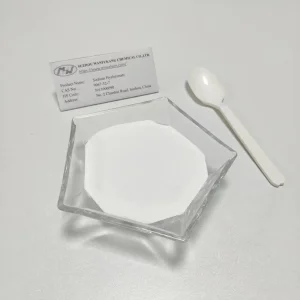
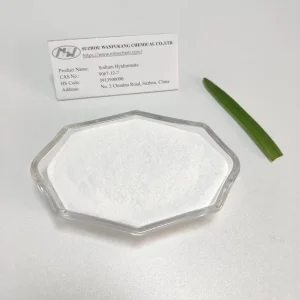
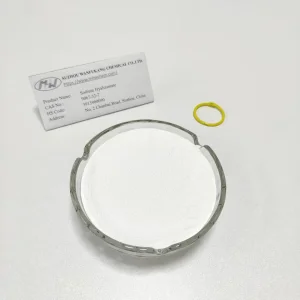
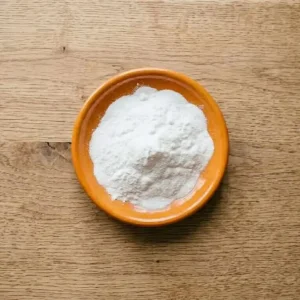
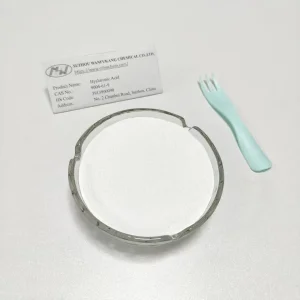
In modern dermatological and cosmetic science, formulation design is increasingly shifting from single-active focus to target-specific synergistic ecosystems. The combination of Salicylic Acid (a Beta-Hydroxy Acid or BHA) and Hyaluronic Acid (a naturally occurring glycosaminoglycan or HA) represents one of the most chemically balanced and effective pairings for addressing skin barrier function, follicular keratinization, and hydration homoeostasis.
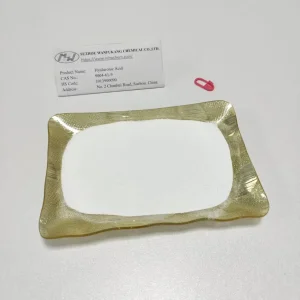
Salicylic Acid acts as a lipid-soluble keratolytic agent. Because of its lipophilic structure, it is capable of penetrating deep into the sebaceous glands and follicular openings to hydrolyze the intercellular lipids holding dead cells together. This effectively clears comedones, addresses acneic pathways, and reduces sebum accumulation. However, this exfoliation process can temporarily elevate trans-epidermal water loss (TEWL) and trigger irritation by disrupting the stratum corneum structure.
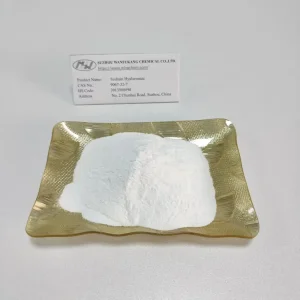
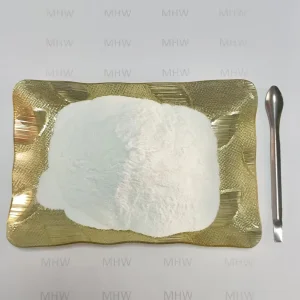
This is where Hyaluronic Acid (Sodium Hyaluronate) plays an indispensable role. By supplying multiple molecular weights of HA—from high molecular weight to protect the surface barrier down to oligo-HA to stimulate endogenous synthesis—formulations can immediately replenish the hydration depleted by the exfoliation process. HA acts as a biological sponge, binding up to 1000 times its molecular weight in water, which cushions the epidermis, mitigates potential inflammatory cascades triggered by BHA, and accelerates cellular recovery.
For B2B formulators, balancing the pH and stability of these two ingredients is crucial:
The global demand for high-purity cosmetic raw materials has experienced a major compound annual growth rate (CAGR) spike, driven by clean-label skincare trends, clinical brand positioning, and the rising consumer awareness of raw material quality. In particular, the global market for Sodium Hyaluronate is projected to reach unprecedented valuations, while the demand for pharmaceutical and cosmetic grades of Salicylic Acid continues to expand across North America, Europe, and rapid-growth hubs like the Indian subcontinent.
| Material / Grade | Primary Industrial Use | Global Quality Benchmark | Supply Chain Key Metric |
|---|---|---|---|
| Cosmetic Grade HA (Assay >98%) | Serums, Hydrating Emulsions, Anti-aging Creams | Low Heavy Metals, High Purity, Non-Animal Origin | Fermentation batch stability |
| Injection / Ophthalmic Grade HA | Dermal Fillers, Intra-articular Injections, Eye Drops | Sterility, Endotoxin <0.05 IU/mg, EP/USP Compliant | GMP Cleanroom standards |
| Food Grade Hyaluronic Acid | Nutraceutical Supplements, Joint Care Formulas | High bio-availability, certified microbiological control | Halal & Kosher status |
| Salicylic Acid (BP/USP) | Acne washes, Chemical Peels, Preservative Synergists | Minimal phenol residues, highly defined particle distribution | REACH compliance (EU) |
Global procurement agents are transitioning from general chemical distributors to direct, certified manufacturers capable of providing transparent documentation (COA, MSDS, DMF, ECOCERT/COSMOS certifications). This paradigm shift is driven by stricter cosmetic safety regulations globally, such as MoCRA in the United States and evolving regulations within the European Union.
As India, Southeast Asia, Europe, and the Americas scale up local cosmetic manufacturing, Suzhou Wanfukang Chemical Co., Ltd. has established itself as an essential manufacturing partner. The reliability of Chinese chemical production, especially in the high-purity biological synthesis of Sodium Hyaluronate, rests on three key pillars:
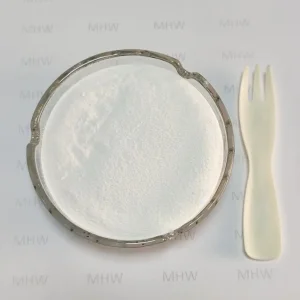
Unlike traditional extraction methods that relied on animal tissues, our Sodium Hyaluronate is produced through advanced bacterial fermentation (non-animal source streptococcus zooepidemicus). This guarantees high molecular uniformity, exceptional purity (assay above 98%), and absolute biological safety, meeting the demands of global vegan and clean-beauty brands.
Every single batch undergoes testing to ensure conformance with USP, EP, and BP standards. From molecular weight distribution tracking via Size Exclusion Chromatography (SEC) to heavy metal limits (Pb, As, Hg, Cd) under 10ppm, our internal analytics laboratory ensures what leaves our facility matches your raw material specification sheet perfectly.
Located in the heart of China's chemical innovation corridor in Suzhou, we optimize everything from raw materials sourcing to international logistics. This reduces lead times and lowers manufacturing costs, allowing us to pass the savings directly to international buyers while keeping annual capacities stable even during high global demand.
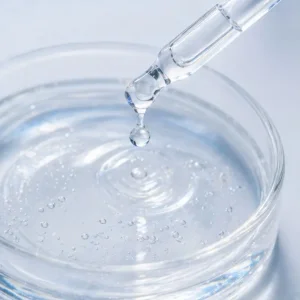
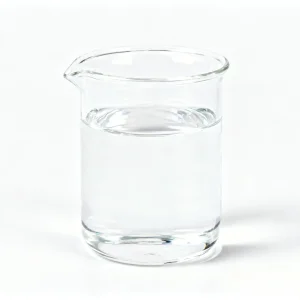
In recent years, the Indian skincare sector has experienced exponential growth. Suzhou Wanfukang Chemical Co., Ltd. has become a major supplier for Indian cosmetic brands and pharmaceutical houses. Our ability to supply custom physical forms—such as 1% Sodium Hyaluronate Aqueous Solutions and high-performance exfoliating powders—has allowed Indian buyers to create high-efficacy formulations suited for tropical climates where skin barrier balancing and sebum control are highly sought after by consumers.
Formulating with actives requires a precise understanding of ingredient synergy, physical-chemical limitations, and skin physiology. The following table showcases how our chemical portfolios are utilized across different commercial applications:
| Application Target | Recommended Active Concentration | Optimal Molecular Weight / Form | Technical Goal & Skin Performance |
|---|---|---|---|
| Daily Purifying Acne Serum | 1.5% - 2.0% Salicylic Acid + 1.0% HA | LMW HA (50-200 kDa) for deep moisture + BHA | Clears pores, reduces inflammation, prevents post-exfoliation dryness |
| Gentle Keratolytic Toner | 0.5% - 1.0% Salicylic Acid + 0.5% HA | HMW HA (>1.5 MDa) to create a soothing film on skin | Softens stratum corneum without disrupting surface lipids |
| Dermal Rejuvenation Ampoules | 0.2% Salicylic Acid + 2.0% HA | Ultra-Low Molecular Weight HA (<10 kDa) + BHA | Deep epidermal hydration, boosting collagen synthesis pathways |
| Anti-Acne Spot Treatments | 2.0% Salicylic Acid + 1.5% 4D HA | 4D Hyaluronic Acid Matrix (Cross-linked + Oligo HA) | Rapid target resolution with intensive moisture recovery |
One of the primary difficulties in formulating with Salicylic Acid is its poor solubility in water, which often leads to crystallization in hydro-gels. Formulators traditionally use high percentages of denatured alcohol to dissolve it, which can dry out the skin. Our technical support team recommends utilizing glycols or cosmetic-grade betaine as solubilizers, combined with a sodium hyaluronate matrix, to keep the formulation stable and gelled without using drying alcohols.
Additionally, because Hyaluronic Acid can degrade in highly acidic environments (pH < 3.5), we recommend using buffered systems (such as sodium citrate/citric acid buffers) to maintain the pH at a stable 4.0. This range preserves the exfoliating properties of Salicylic Acid while maintaining the long-term viscosity and hydrating performance of the Hyaluronic Acid polymer chains.
From clinical-grade cosmetic actives to high-purity food additives, explore our complete inventory of ingredients optimized for international shipment.
Common formulation and purchasing queries answered by our technical laboratory experts.
Yes, they can, but it requires careful formulation adjustment. Salicylic Acid requires a lower pH (pH 3.0 to 4.0) to remain active as an exfoliant, while Sodium Hyaluronate is susceptible to acid hydrolysis at pH values below 4.5. To resolve this, formulators typically use lower concentrations of Salicylic Acid, utilize encapsulation methods, or select medium-to-low molecular weight HA, which displays better resistance to viscosity drops under mildly acidic environments.
Our cosmetic-grade Sodium Hyaluronate conforms strictly to international safety benchmarks. The total heavy metal content is guaranteed to be less than 10 ppm, with individual limits of Lead (Pb) < 2 ppm, Arsenic (As) < 2 ppm, Mercury (Hg) < 0.1 ppm, and Cadmium (Cd) < 1 ppm. Every shipment is accompanied by a batch-specific Certificate of Analysis detailing these parameters.
Microbial fermentation (using non-pathogenic strains like Streptococcus zooepidemicus) ensures a high-purity, standardized raw material that is entirely free of animal-derived pathogens, proteins, and viruses. This aligns with global regulations, satisfies consumer demand for vegan-friendly skincare, and provides superior consistency in molecular weight distribution compared to animal-extracted alternatives.
We supply a complete spectrum of molecular weights: High Molecular Weight (HMW) HA >1.6 MDa for film-forming surface moisture protection; Medium Molecular Weight (MMW) HA (800 kDa - 1.5 MDa) for cellular signal transduction; Low Molecular Weight (LMW) HA (100 kDa - 500 kDa) for deep epidermal hydration; and Oligo HA (<10 kDa) for trans-dermal penetration and long-lasting cell replenishment.
Under dry, cool conditions (temperature maintained below 25°C, relative humidity <60%) in the original, unopened double-layered PE bags within fiber drums, our Sodium Hyaluronate and Salicylic Acid powders carry a certified shelf life of 24 months. We recommend avoiding exposure to direct light or heat sources, as UV rays can degrade polymer networks.