1 / 3

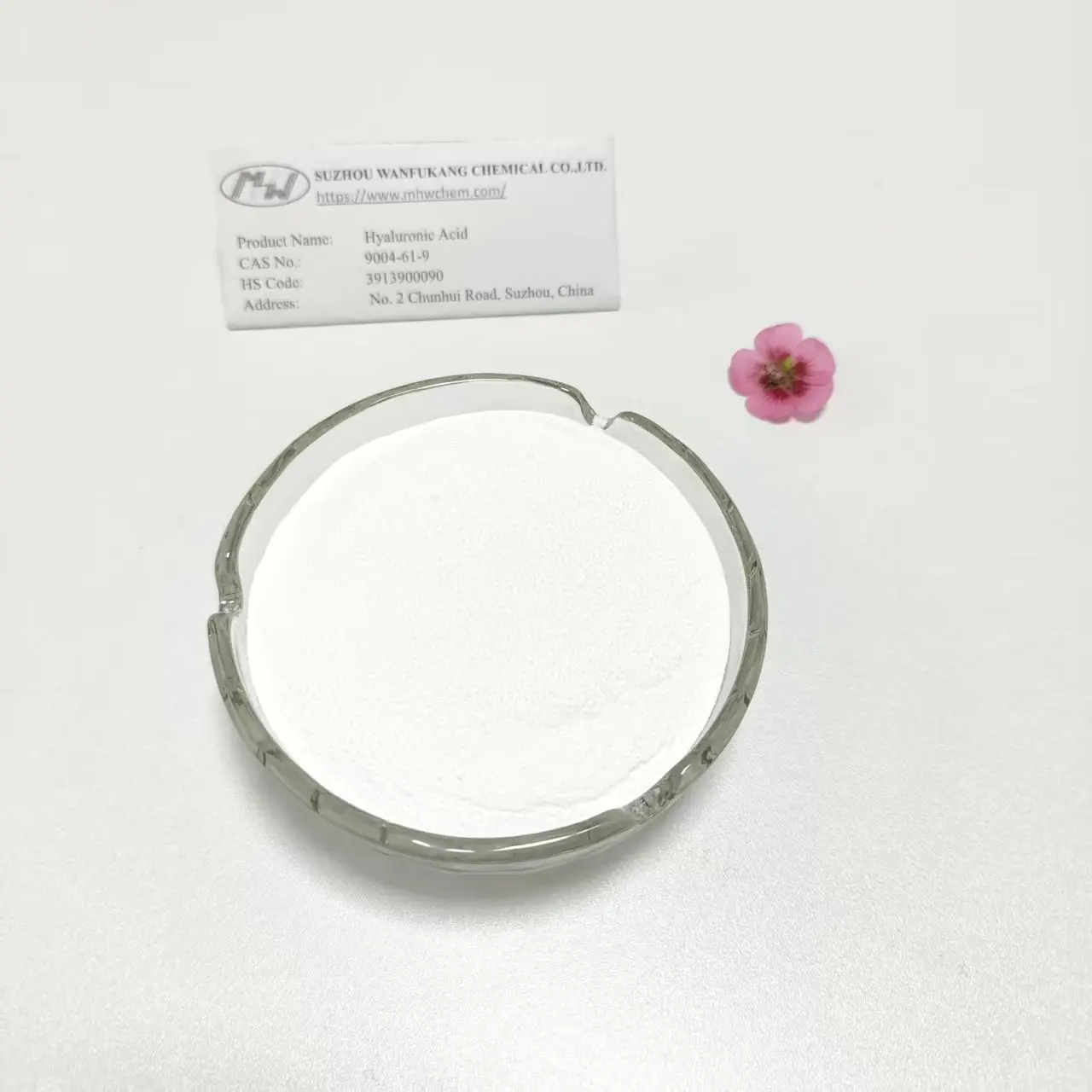
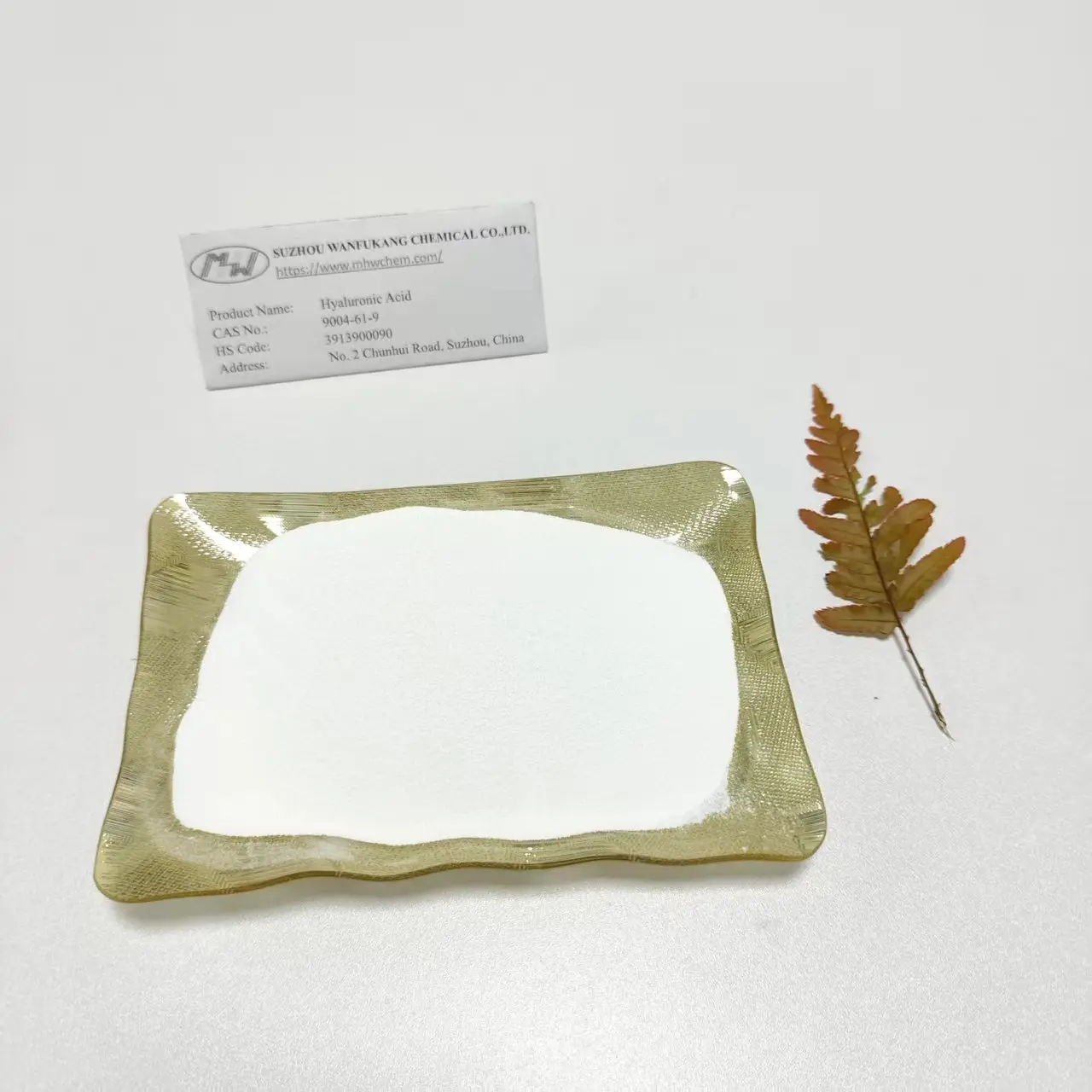
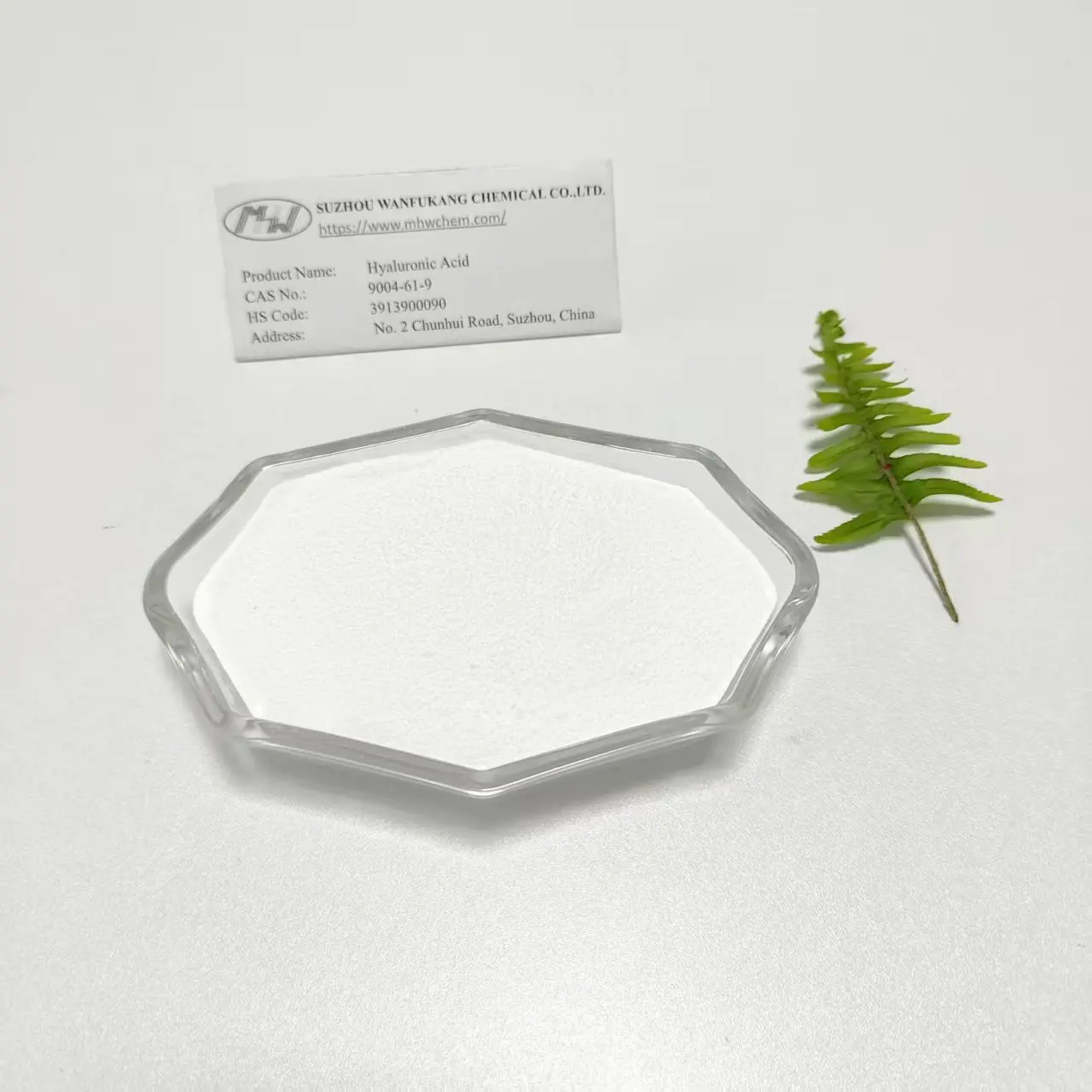
| Product Name | Hyaluronic Acid |
| Chemical Formula | (C14H21NO11)n |
| Chemical Structure |

|
| CAS No. | 9004-61-9 |
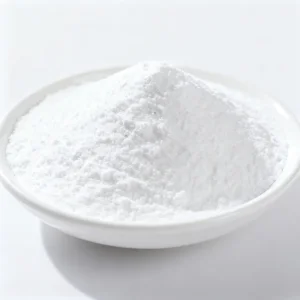
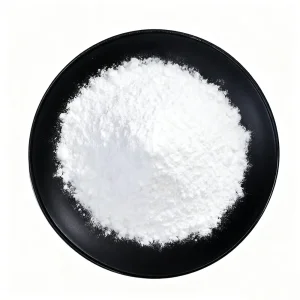
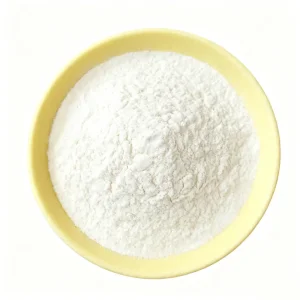
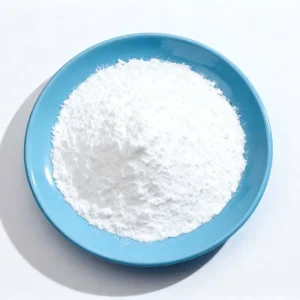
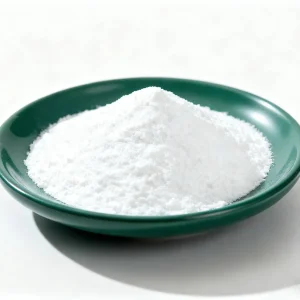
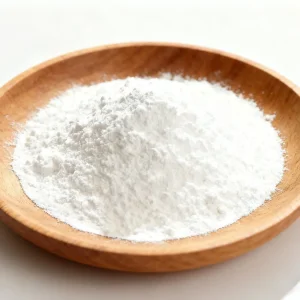
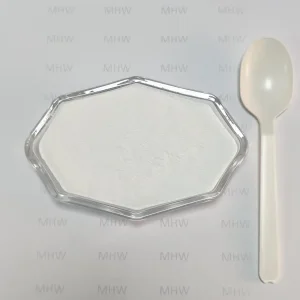
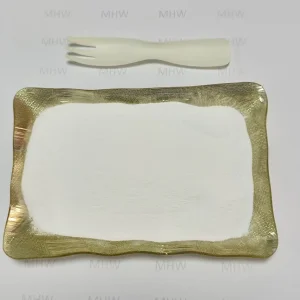
| Appearance | White, fine powder |
| Assay | ≥95% |
| Molecular Weight | 3,000Da- 2.0MDa |
| Solubility | Soluble in water |
| Source | Microbial fermentation |
| # | Molecular Weight Level | Physical Properties & Penetrating Power | Core Skincare Benefits |
|---|---|---|---|
| 1 | High MW | It forms a dense, bioelastic membrane that remains on the skin surface. | Physical barrier: Significantly reduces transepidermal water loss (TEWL), combats dry environments, and gives the product a silky smooth texture. |
| 2 | Medium MW | Excellent stretchability, penetrating the superficial layer of the stratum corneum. | Soften cuticles: Continuously replenish moisture to the stratum corneum, improve skin roughness, and enhance barrier resilience. |
| 3 | Low MW | It has strong penetrating power and can penetrate deep into the skin. | Deeply nourishes: Repairs damaged intercellular spaces, increases skin hydration from the inside out, and significantly relieves dryness at the base of the skin. |
| 4 | Oligo HA | With its extremely small molecular weight, it possesses excellent transdermal absorption rate. | Cellular signaling: It has extremely strong penetrating power, can promote collagen synthesis, repair photoaging damage, and exert anti-aging activity. |