1 / 3

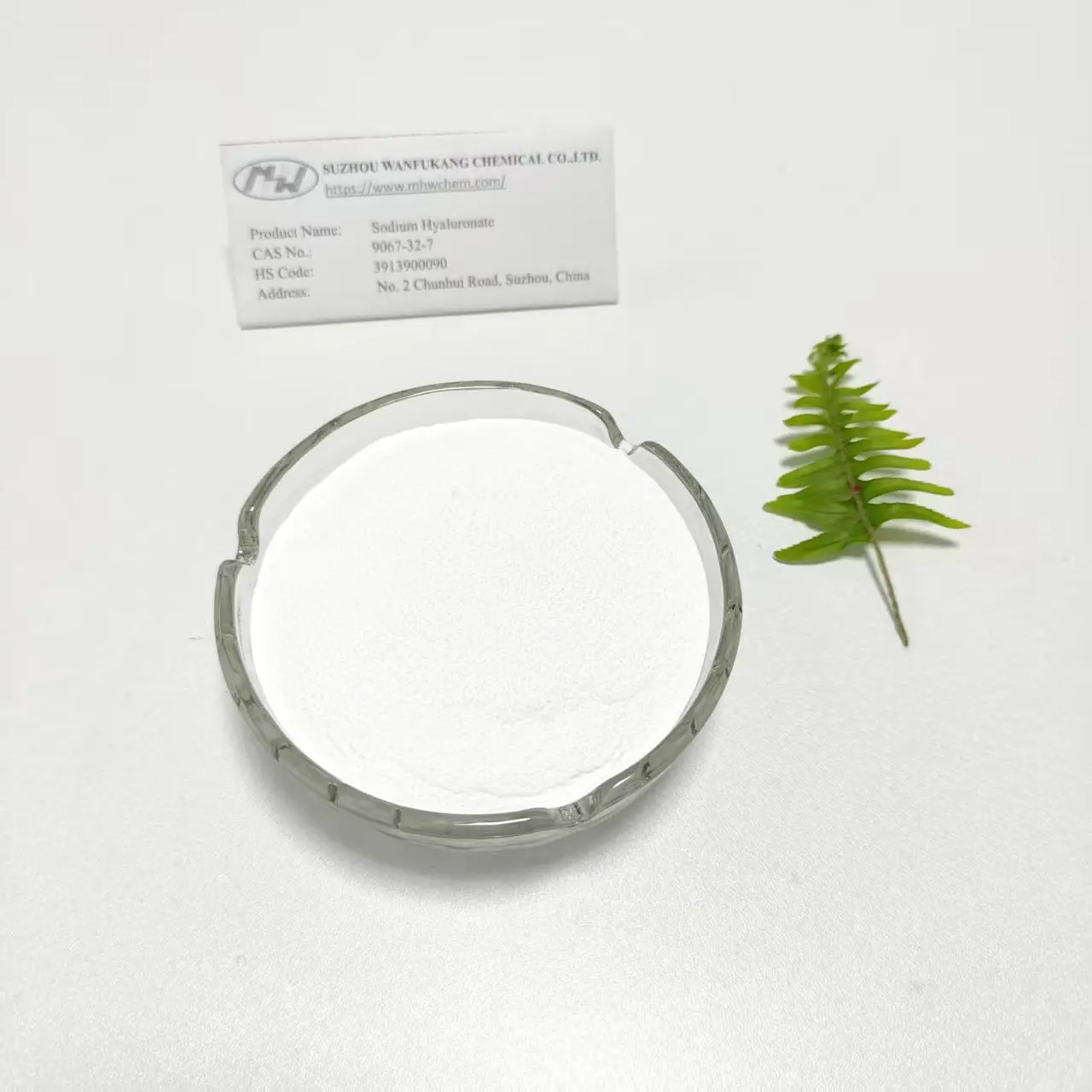
| Product Name | Sodium Hyaluronate |
| Chemical Formula | (C14H20NNaO11)n |
| Chemical Structure |

|
| CAS No. | 9067-32-7 |
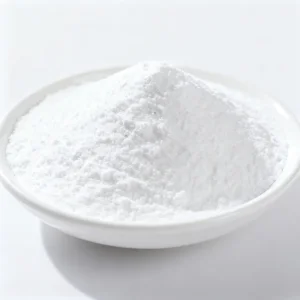
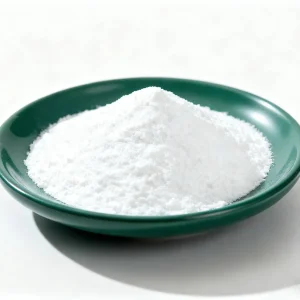
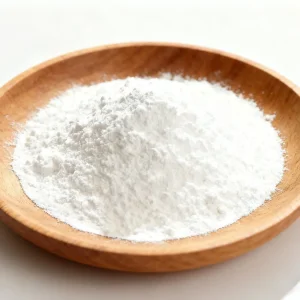
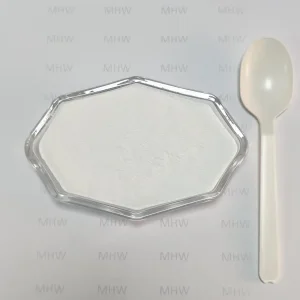
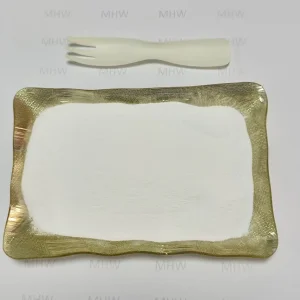
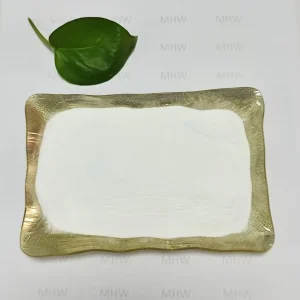
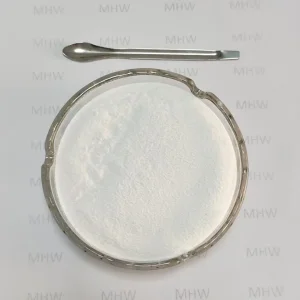
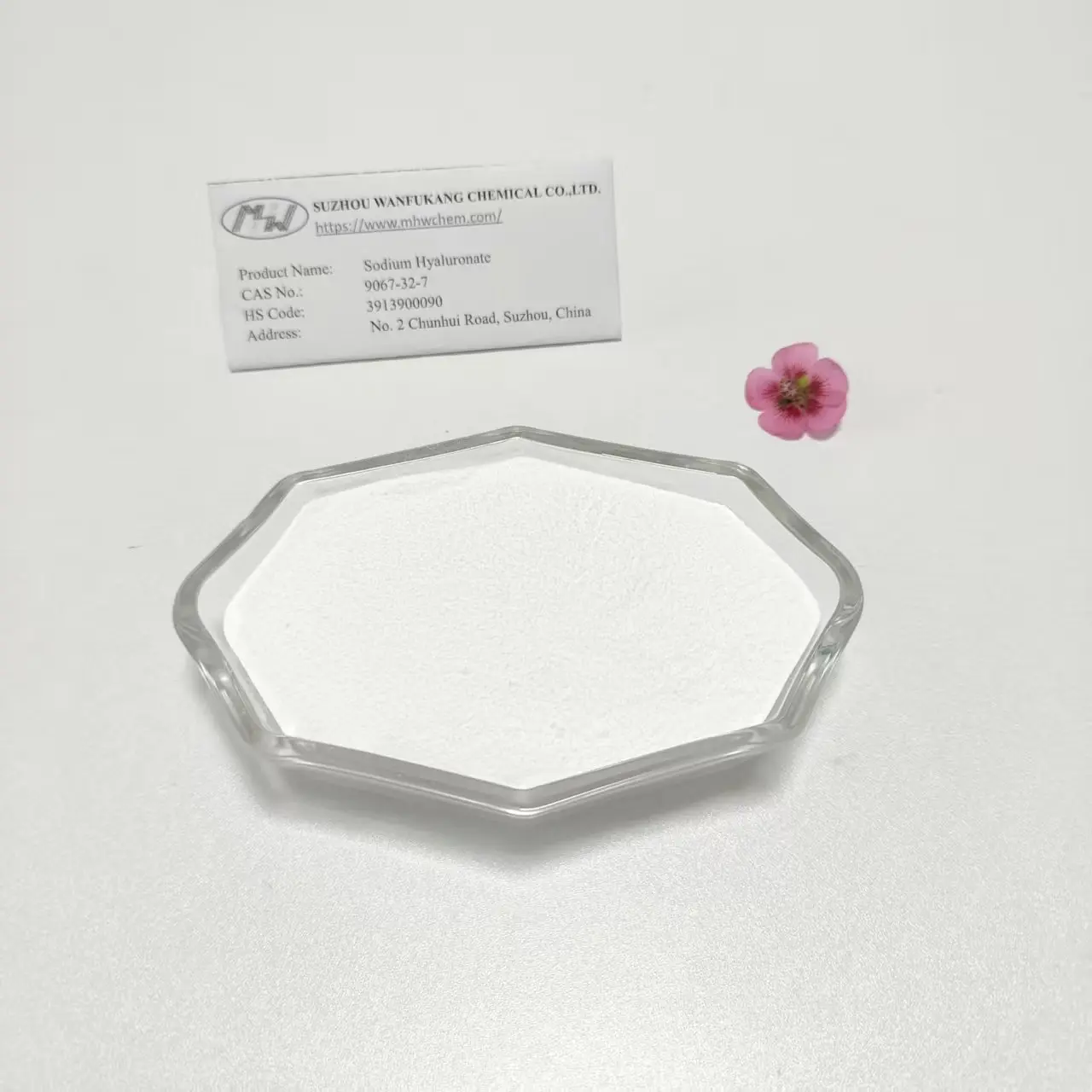
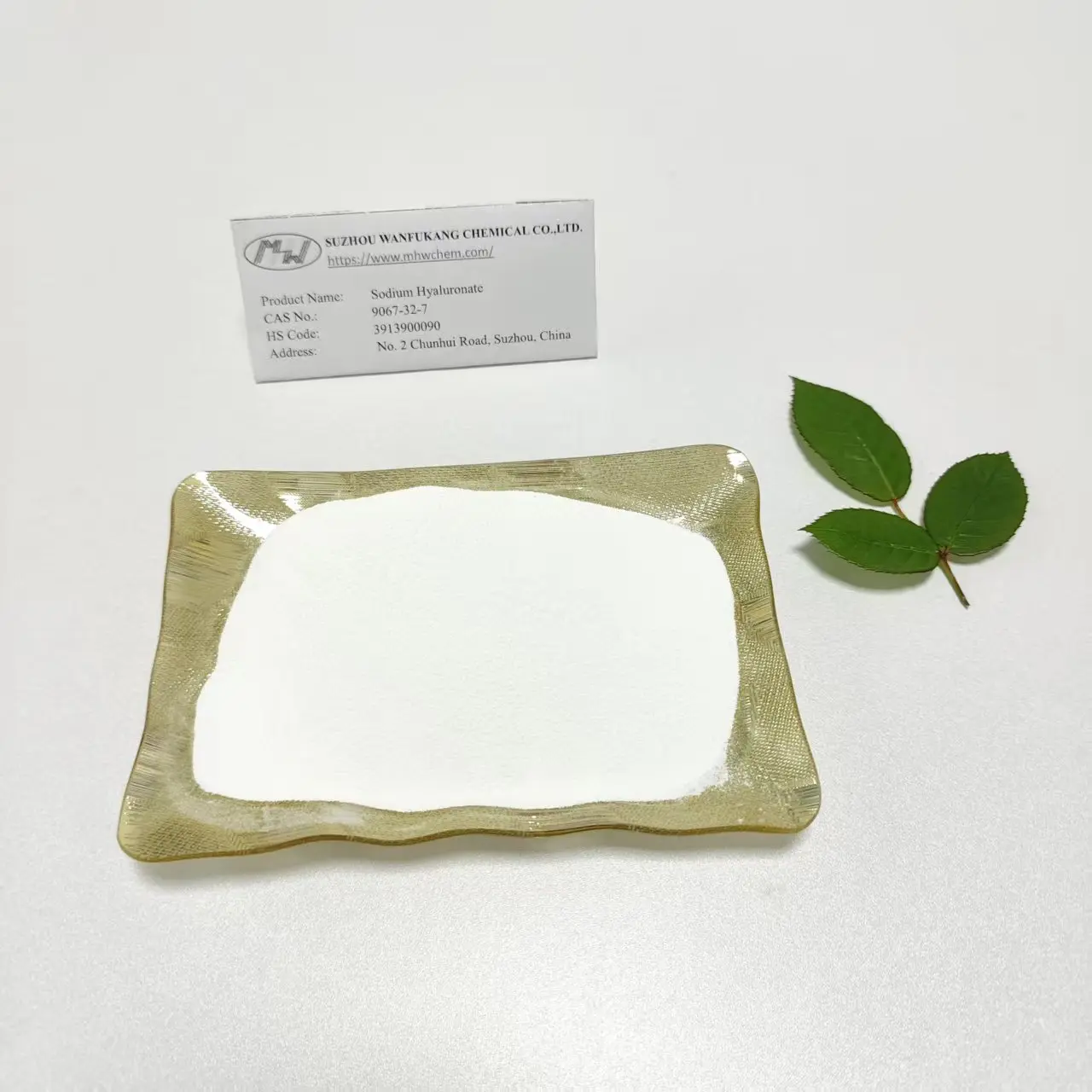
| Appearance | White, fine powder |
| Assay | ≥95% |
| Molecular Weight | 3,000Da – 2.0MDa |
| Solubility | Soluble in water |
| Source | Microbial fermentation |
Sodium hyaluronate has a super water-absorbing capacity, capable of absorbing hundreds to thousands of times its own weight in water. It forms a moisturizing film on the skin's surface, continuously replenishing the stratum corneum with moisture and significantly improving dryness.
Sodium hyaluronate increases skin hydration and enhances the elasticity of the stratum corneum, gradually diminishing fine lines caused by dryness. Long-term use helps improve the visibility of both dynamic and static wrinkles.
Sodium hyaluronate forms a protective hydrating layer on the skin's surface, reducing the impact of external stimuli (such as pollution and UV rays) and improving skin tolerance.
Continuous hydration improves skin firmness, making the skin appear fuller and more elastic, and enhancing overall radiance and smoothness.
Standard packaging is 1 kg/bag, meeting the needs of different stages such as laboratory R&D, small-batch pilot production, and large-scale production. Customized packaging solutions are also available to meet specific customer requirements.
Leveraging a mature production system and stable raw material sources, long-term continuous supply is ensured, guaranteeing the continuity of customer production plans and supply chain security. Suitable for long-term cooperation and large-volume procurement needs.
A complete set of technical documents, including COA (Certificate of Analysis), MSDS (Material Safety Data Sheet), and TDS (Technical Data Sheet), are provided with the shipment to facilitate customer formulation development, quality assessment, and compliance applications.
Various molecular weight specifications, viscosity grades, and functional customization solutions can be provided according to different application scenarios and formulation requirements to help customers optimize product performance and enhance the competitiveness of end products.
This product is widely used in moisturizing serums, anti-wrinkle creams, masks, eye creams, and repairing skincare products, especially suitable for formulations requiring high moisturizing and anti-wrinkle functions.
Yes. Sodium hyaluronate is derived from a bio-fermentation process, is mild in nature, has low irritation, and good skin compatibility, making it generally suitable for sensitive skin skincare formulations.
Sodium hyaluronate has good water solubility and can gradually dissolve in cold or room temperature water to form a uniform, transparent, viscous solution, facilitating formulation development and application.
High molecular weight sodium hyaluronate forms a protective barrier on the skin surface to lock in moisture, while low molecular weight versions penetrate deeper into the skin layers to provide deep hydration and support structural repair.
It is highly recommended to store the powder in a cool, dry place, sealed tightly in its original packaging, and protected from direct sunlight, heat, and moisture to ensure product stability and shelf-life.
Yes. Our Sodium Hyaluronate is produced through microbial fermentation, making it 100% vegan-friendly, non-animal derived, and suitable for ethical cosmetic formulations.