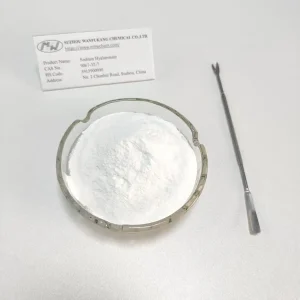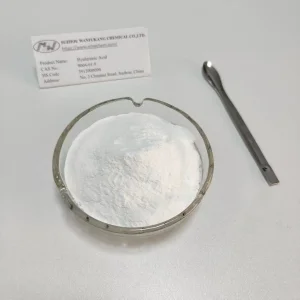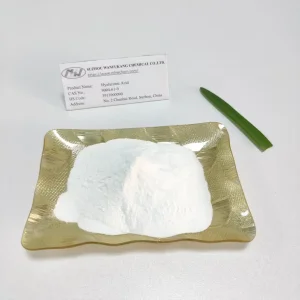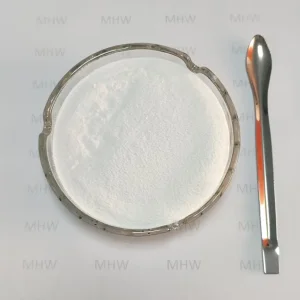
Explore our foundational range of highly pure hyaluronic acid derivatives and synergistic active ingredients designed for high-end skincare, functional food formulation, and biomedical applications.
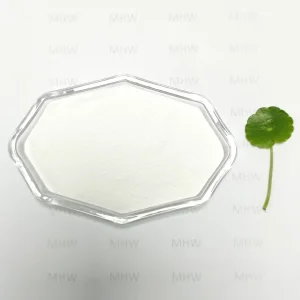
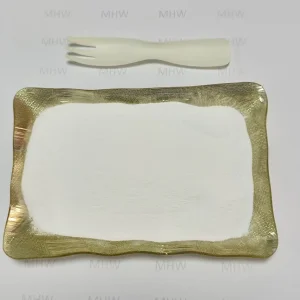
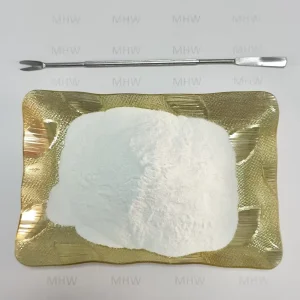
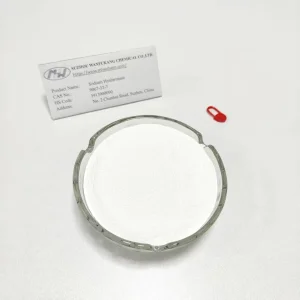
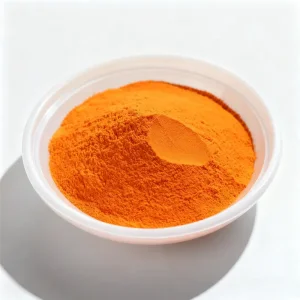
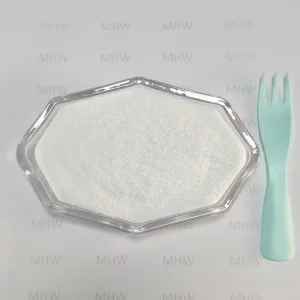
Analyzing the evolution of 100% Pure Hyaluronic Acid (Sodium Hyaluronate) from a niche cosmetic active to a cornerstone of modern bio-medicine, functional food, and clinical therapeutics.
The market has shifted away from generic "Hyaluronic Acid" toward highly customized molecular weight ranges. Buyers now require exact specifications: Ultra-low Molecular Weight (<10 kDa) for transdermal delivery and cellular regeneration, Medium Molecular Weight (800-1200 kDa) for moisture retention, and High Molecular Weight (>1600 kDa) for structural protective film formulation and ophthalmic lubrication.
Consumer preferences for sustainable and vegan products have established bio-fermentation as the global standard. Using non-genetically modified Streptococcus zooepidemicus strains grown on plant-derived media ensures zero animal contamination, minimal protein impurities, and exceptional biological safety profile, meeting Halal, Kosher, and vegan certifications globally.
Beyond topical serums, the fastest-growing application sectors are oral nutricosmetics (food-grade sodium hyaluronate for joint and skin matrix replenishment) and clinical-grade injectables. The edible hyaluronic acid market is growing rapidly in APAC and North America, supported by peer-reviewed research demonstrating its oral bioavailability.
For research directors, formulation chemists, and procurement managers in pharmaceutical and major cosmetic brands, sourcing 100% Pure Hyaluronic Acid is not merely about finding a competitive price. It is about mitigating regulatory risk, ensuring microbiological purity, and securing supply chain continuity.
Our raw material purification process addresses these specific concerns by implementing strict quality control parameters:
| Parameters | Cosmetic Grade | Food Grade | Ophthalmic/Pharm Grade |
|---|---|---|---|
| Sodium Hyaluronate | ≥ 95.0% | ≥ 95.0% | ≥ 98.0% |
| Glucuronic Acid | ≥ 45.0% | ≥ 46.0% | ≥ 47.5% |
| Molecular Weight | Custom (10kDa - 2.2MDa) | Custom (800kDa - 1.5MDa) | High (1.0MDa - 2.5MDa) |
| Heavy Metals | ≤ 20 ppm | ≤ 10 ppm | ≤ 5 ppm |
| Protein | ≤ 0.1% | ≤ 0.1% | ≤ 0.05% |
| Endotoxins | N/A | N/A | ≤ 0.05 IU/mg |
Operating out of China’s advanced chemical industrial cluster, our manufacturing infrastructure utilizes a Factory 4.0 operational model. This model integrates automated fermentation control systems with real-time chromatography monitors to ensure batch-to-batch consistency and stability.
For overseas cosmetic and pharmaceutical producers, sourcing from us offers strategic advantages:



Analyzing how different grades of 100% Pure Hyaluronic Acid behave across various chemical environments and localized consumer application scenarios.
Utilizing multi-molecular weight blends allows for multi-depth skin hydration. Lower molecular weights penetrate deeply to target fine lines and improve skin elasticity, while high molecular weight sodium hyaluronate forms a breathable film on the surface, preventing transepidermal water loss (TEWL).
Ophthalmic-grade sodium hyaluronate acts as a highly viscoelastic lubricant in artificial tear formulations and surgical viscoelastic devices. Its water-binding capacity and shear-thinning behavior ensure long-lasting relief for dry eye syndrome and protective properties during intraocular surgeries.
Ingested hyaluronic acid absorbs through the gastrointestinal tract and migrates to synovial tissues. Combining it with Chondroitin Sulfate and Coenzyme Q10 helps support cartilage matrix density, reduce joint friction, and alleviate symptoms of osteoarthritis.
Established as a professional supplier and exporter of Sodium Hyaluronate and Hyaluronic Acid, Suzhou Wanfukang Chemical Co., Ltd. delivers high-purity ingredients to global pharmaceutical, cosmetic, and nutritional industries.
Over years of development, we have expanded our raw material portfolio to include cosmetic ingredients, health food materials, and pharmaceutical ingredients. Many of our core products are widely applied in professional cosmetics, joint health supplements, and medical devices.
Learn More About UsWe specialize in the development and export of cosmetic, food, and functional ingredients. Our product range covers:
Stay informed with our technical analyses, industry columns, and supplier assessment strategies.
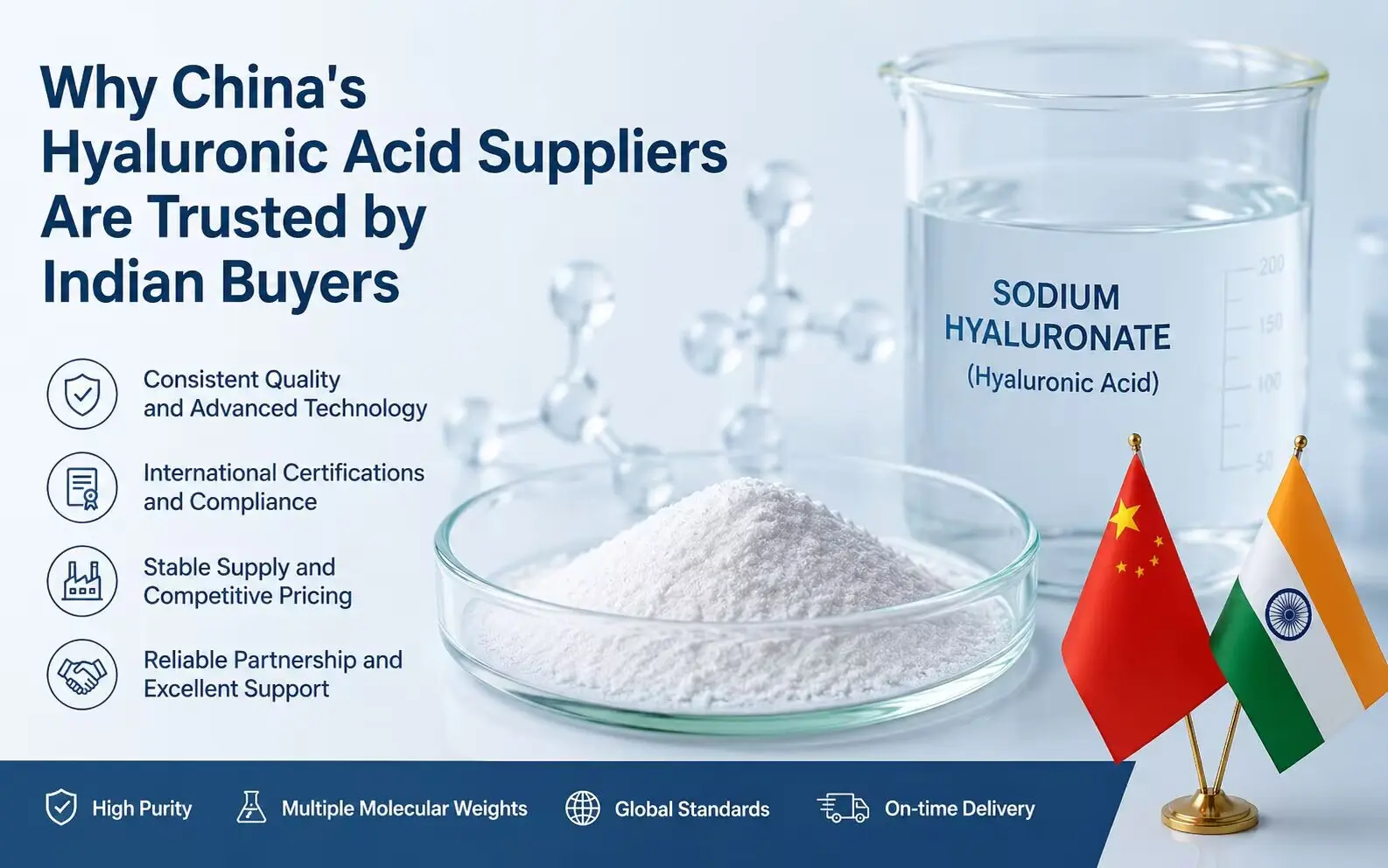
In recent years, with the rapid development of India's cosmetics, pharmaceutical, and food and health product industries, the market demand for hyaluronic acid (HA) and sodium hyaluronate has continued to grow. Against this backdrop, more and more Indian buyers are turning their attention to Chinese suppliers. So, why have Chinese hyaluronic acid suppliers won the long-term trust of Indian buyers?
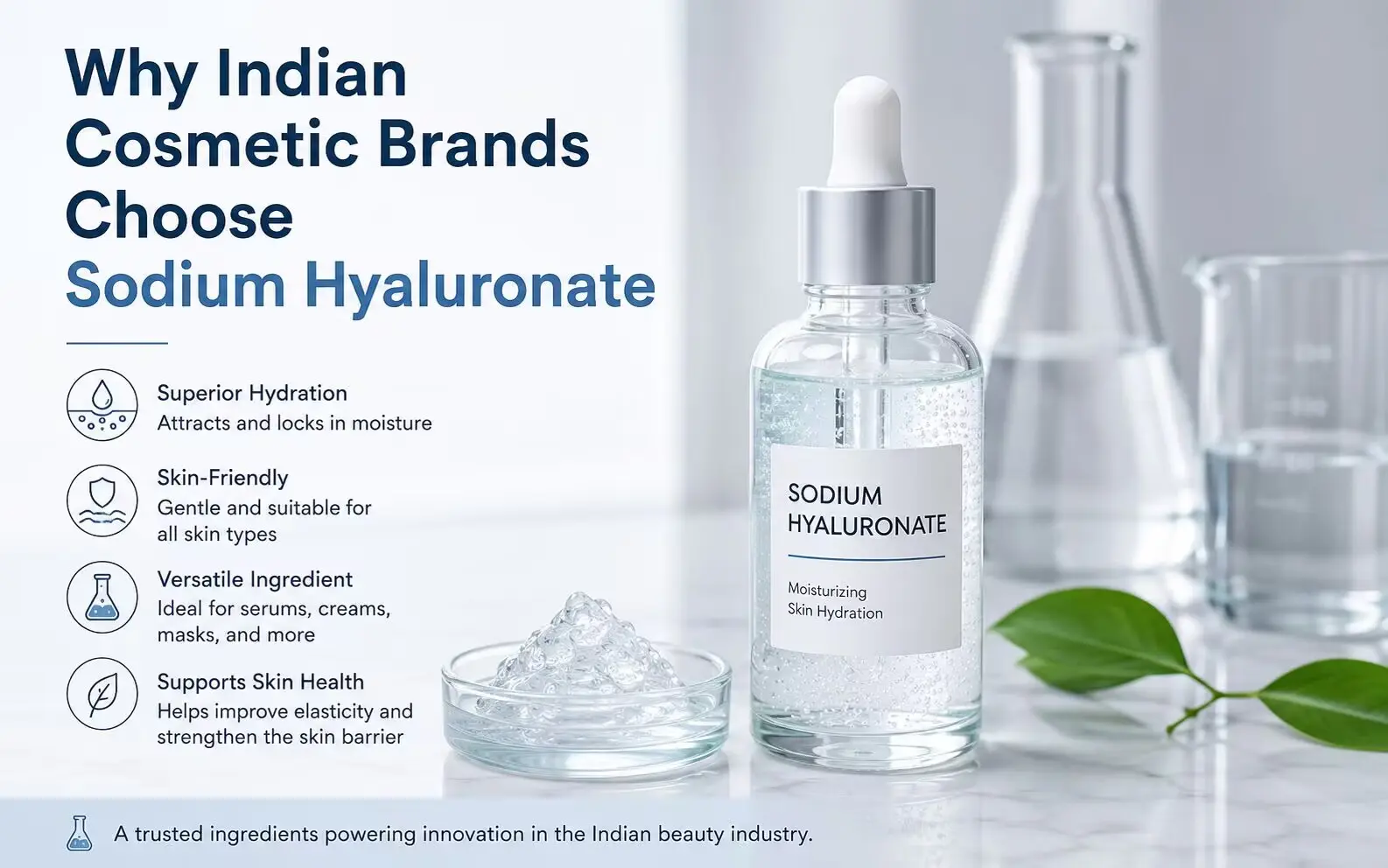
In recent years, with the continued growth of the Indian beauty and personal care market, consumers' demand for highly effective and safe skincare products has been constantly increasing. As a widely used moisturizing ingredient in the international market, sodium hyaluronate is becoming an important choice for more and more Indian cosmetic brands, and is widely used in serums, creams, masks, sunscreens, and makeup.
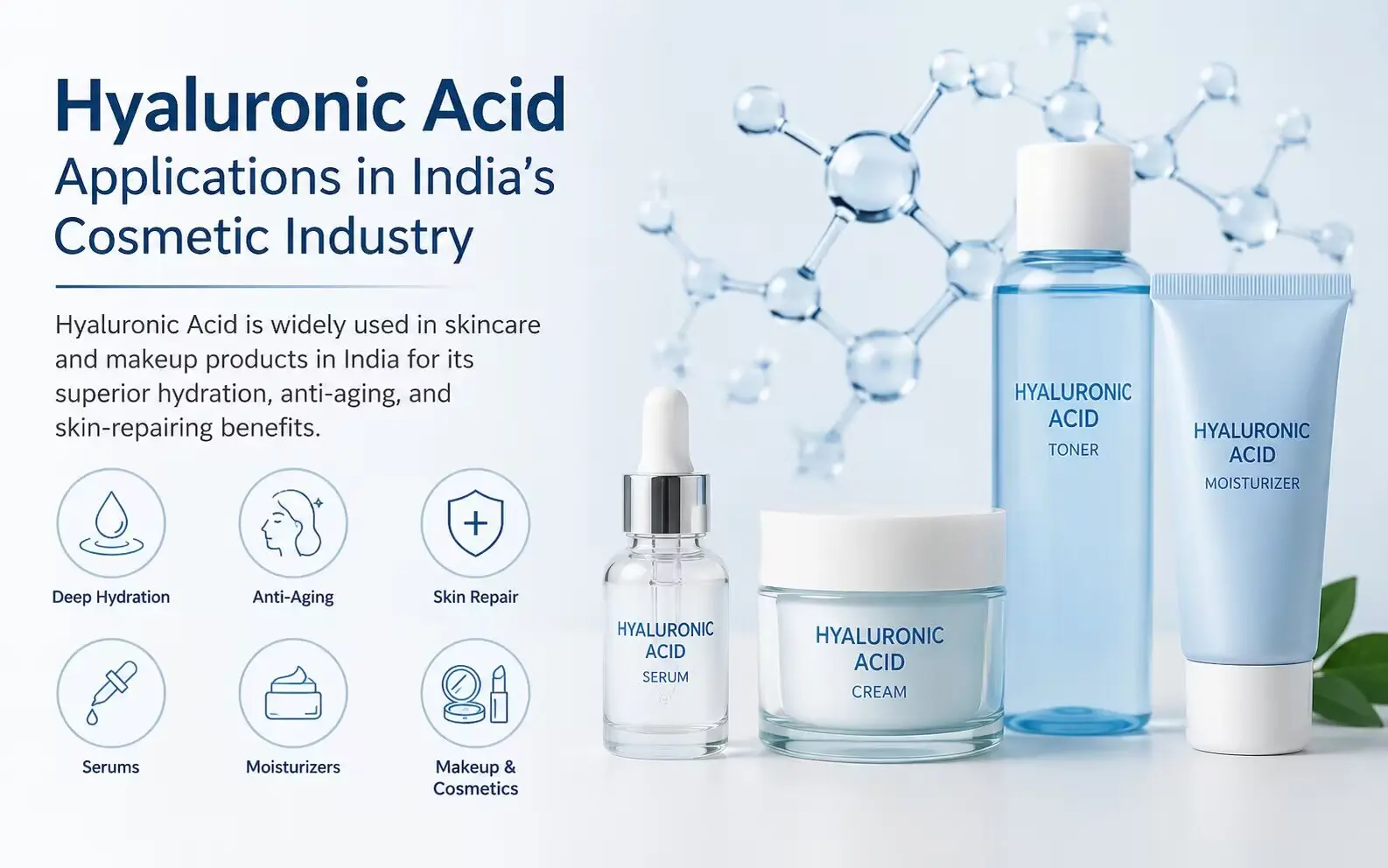
With the continued expansion of the Indian cosmetics market and the growing consumer demand for high-quality skincare products, hyaluronic acid (HA) is gradually becoming one of the most watched functional ingredients in the Indian cosmetics industry.
Expert answers to common queries regarding molecular weights, application suitability, stability, and global trade logistics for pure Hyaluronic Acid.
Molecular weight determines the skin penetration and mechanism of action for Sodium Hyaluronate:
Our 100% Pure Hyaluronic Acid is produced via the bio-fermentation of Streptococcus zooepidemicus on a plant-based peptone and glucose media. No animal-derived materials are used during the fermentation, extraction, or purification processes. We provide Halal, Kosher, and vegan declarations to support clean-label product claims.
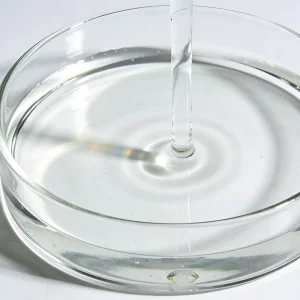
Storing a 1% Sodium Hyaluronate solution requires careful attention to pH stability (optimally maintained between 6.0 and 7.5) and protection from microbial contamination. Because aqueous solutions are susceptible to bacterial growth, adding broad-spectrum preservatives (such as phenoxyethanol, ethylhexylglycerin, or organic acids) is necessary. We supply stabilized 1% aqueous solutions, processed under sterile conditions, to simplify manufacturing for formulation facilities.
China represents over 70% of the global production capacity for Sodium Hyaluronate. Our facility utilizes automated fermentation control, raw material integration, and high-throughput purification columns to maintain quality at scale. This integration keeps batch-to-batch variations low, controls heavy metal impurities, and provides cost efficiencies that benefit global manufacturers.
Because HA powder is highly hygroscopic, it is packaged in double-layer polyethylene bags and sealed in fiber drums (typically 1kg, 5kg, 10kg, or 25kg units). It should be stored in cool (under 15°C), dry conditions, away from light, in sealed containers. When stored correctly, the shelf life of our pure hyaluronic acid powder is 24 months.
Select the specific grade of Hyaluronic Acid, Sodium Hyaluronate, or co-active ingredients required for your next formulation batch.