Best Niacinamide Hyaluronic Acid Serum Manufacturers & Products

The Ultimate B2B Sourcing Guide & Technical Whitepaper for Global Brands, R&D Teams, and Strategic Buyers.

Primary Raw Material Portfolio

Premium grade cosmetics and pharmaceutical active ingredients engineered for high-performance formulation pipelines.
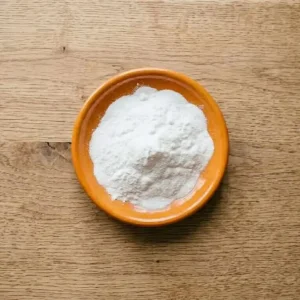
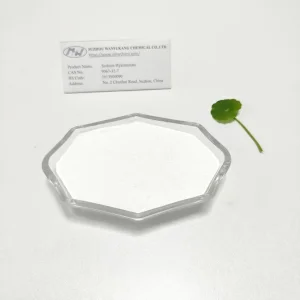
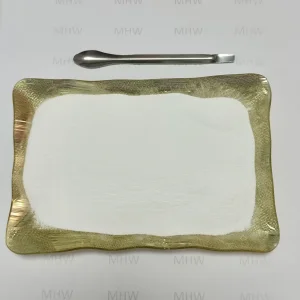
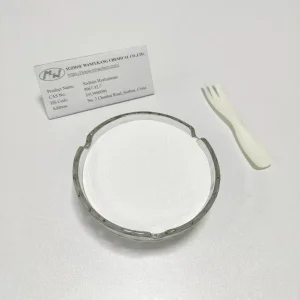
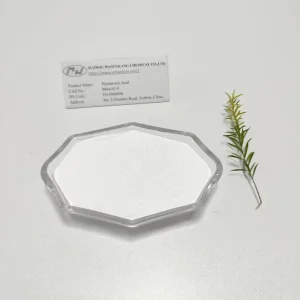
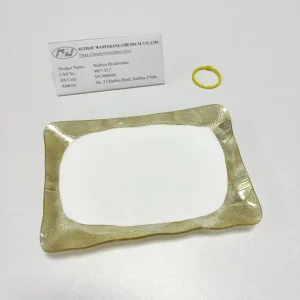
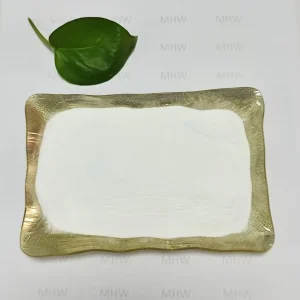
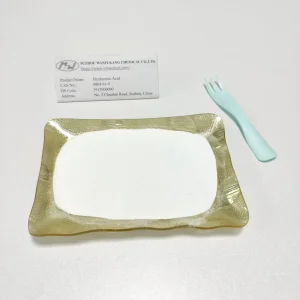
Non-Animal Source Food Grade Hyaluronic Acid Powder

Non-Animal Source Food Grade Hyaluronic Acid Powder

View Technical Spec Sheet
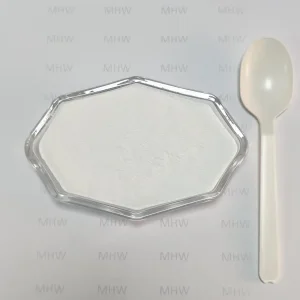
Halal Sodium Hyaluronate Food Grade

China Halal Sodium Hyaluronate Food Grade Assay Above 95%

View Technical Spec Sheet
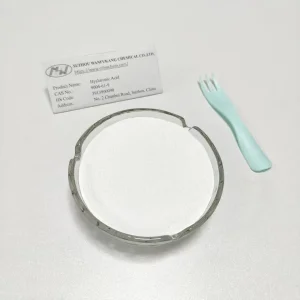
High Purity Cosmetic Grade Sodium Hyaluronate Powder

China High Purity Cosmetic Grade Sodium Hyaluronate Powder

View Technical Spec Sheet
Artificial Tears Raw Material Sodium Hyaluronate Powder

Best Artificial Tears Raw Material Sodium Hyaluronate Powder

View Technical Spec Sheet
Cosmetic Grade Low Molecular Weight Hyaluronic Acid

Cosmetic Grade Low Molecular Weight Hyaluronic Acid

View Technical Spec Sheet
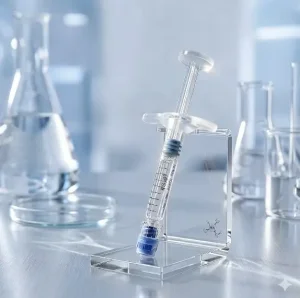
Hyaluronic Acid Powder for Aesthetic Injection

Hyaluronic Acid Powder for Aesthetic Injection (Aesthetic Grade)

View Technical Spec Sheet
Eye Drop Grade Sodium Hyaluronate for Artificial Tears

Eye Drop Grade Sodium Hyaluronate for Artificial Tears

View Technical Spec Sheet
Non-animal Derived Eye Drop Grade Hyaluronic Acid

Non-animal Derived Eye Drop Grade Hyaluronic Acid Supplier

View Technical Spec Sheet

1. Scientific Synergy: Niacinamide & Hyaluronic Acid Molecular Co-Action

The combination of Niacinamide (Vitamin B3) and Hyaluronic Acid (HA, Sodium Hyaluronate) represents one of the most clinically verified synergistic parings in contemporary cosmetics. From a bio-chemical standpoint, these two compounds solve distinct but interdependent dermatological challenges. Niacinamide is a water-soluble vitamin that targets cellular metabolism, working as a precursor to the coenzymes NAD(H) and NADP(H). These coenzymes are crucial for cellular repair, sebum regulation, and the inhibition of melanosome transfer from melanocytes to keratinocytes, which results in visible skin brightening.

Conversely, Hyaluronic Acid is a glycosaminoglycan with an extraordinary capacity to bind water molecules—up to 1,000 times its molecular weight. When combined in a single serum formulation, Hyaluronic Acid creates a highly hydrated extracellular matrix that facilitates the optimal transdermal delivery of Niacinamide. In turn, Niacinamide strengthens the epidermal barrier by stimulating the synthesis of ceramides, free fatty acids, and cholesterol. A reinforced lipid barrier prevents Transepidermal Water Loss (TEWL), locking in the hydration provided by the Hyaluronic Acid. Together, they form a self-reinforcing loop: HA provides the moisture, while Niacinamide secures the biological barrier required to retain it.

Clinical Formulation Insight: R&D laboratories specify that the optimal pH range for a stable Niacinamide-HA serum is between 5.5 and 6.5. Deviations below pH 5.0 can trigger the hydrolysis of Niacinamide into nicotinic acid, causing transient skin flushing and localized irritation.

2. The Global Industrial & Commercial Landscape

The global demand for functional skincare ingredients has shifted dramatically from basic moisturization to bio-active performance. Market intelligence indicates that the global market for Niacinamide Hyaluronic Acid Serums is projected to grow at a Compound Annual Growth Rate (CAGR) of 8.4% through 2032. This growth is propelled by an aging global population seeking non-invasive aesthetic treatments and a massive surge in consumer literacy regarding chemical ingredients.

Geographically, North America and Europe remain the largest consumer markets by value, dominated by premium clinical brands and indie clean-beauty labels. However, the Asia-Pacific region, led by China, Japan, and South Korea, is experiencing the fastest consumption volume increase. Furthermore, emerging markets in India and Latin America are seeing rapid premiumization, where cosmetic brands are transitioning from generic formulations to targeted active-ingredient serums to meet the aspirations of middle-class consumers.

3. Sourcing Strategy: Why B2B Brands Choose Chinese Manufacturers

China has consolidated its position as the global epicentre for both Hyaluronic Acid fermentation and high-purity Niacinamide production. Understanding the mechanical advantages of Chinese sourcing is critical for global purchasing directors aiming to balance cost, quality, and regulatory compliance:

  • Fermentation Dominance & Scale: Chinese manufacturers utilize state-of-the-art microbial fermentation processes (using non-pathogenic strains like Streptococcus zooepidemicus) to produce Sodium Hyaluronate. This yields vast economies of scale that cannot be matched by Western suppliers, resulting in a 30% to 50% cost advantage at equivalent purity levels.
  • Precision Molecular Weight Customization: Advanced Chinese facilities can produce custom molecular weight ranges, including High Molecular Weight (HMW) HA (>1.8 MDa) for superficial film formation, Low Molecular Weight (LMW) HA (100–500 kDa) for medium-layer hydration, and Oligo HA (<10 kDa) for deep transdermal absorption.
  • Strict Regulatory Conformity: Leading Chinese manufacturers operate under GMP conditions and hold global certifications, including ISO 9001, ISO 22716, COSMOS, Halal, and Kosher. This ensures the raw materials comply with EU REACH, US FDA, and China's NMPA standards.
  • Vertically Integrated Supply Chains: By clustering chemical plants, formulation facilities, packaging industries, and international ports in provinces like Shandong, Jiangsu, and Zhejiang, Chinese manufacturers can contract lead times down to 14–21 days.

4. Localized Application Scenarios & Customization Rules

Different markets have distinct regulatory requirements and consumer expectations. Brands must tailor their Niacinamide Hyaluronic Acid Serums accordingly:

  • The "Clean Beauty" Segment (North America & Europe): Formulations must exclude parabens, phenoxyethanol, silicones, and synthetic colorants. Manufacturers typically utilize natural preservation systems (e.g., pentylene glycol, caprylyl glycol) and non-animal source Hyaluronic Acid.
  • The Brightening & Spot-Correction Segment (Asia-Pacific): Serums are formulated with higher concentrations of Niacinamide (typically 4% to 5%) coupled with complementary actives like Alpha-Arbutin or Tranexamic Acid to target hyperpigmentation and melasma.
  • The Post-Procedure & Medical-Aesthetic Segment: Designed for use post-laser, microneedling, or chemical peels. These formulations prioritize ultra-high purity, sterile production, and minimal ingredient profiles to prevent sensitization on compromised skin barriers.

5. Technical Audit Guide for B2B Procurement Managers

When vetting a prospective manufacturer for Niacinamide Hyaluronic Acid Serums, B2B procurement managers should request and verify the following technical specifications:

Assay Purity & Impurities: Ensure the Niacinamide raw material has an assay of ≥99.0% and that nicotinic acid impurities are strictly restricted to <100 ppm to avoid skin flushing.
Transmittance and Coloration: Hyaluronic Acid solutions must demonstrate ≥99.0% transmittance at 550nm to ensure clear, sediment-free serums.
Microbiology Controls: Total Aerobic Microbial Count (TAMC) must be <100 CFU/g for cosmetics, and strictly <10 CFU/g or sterile for medical-aesthetic applications.
Heavy Metals Profile: Heavy metal residues (Pb, As, Hg, Cd) must be verified via Inductively Coupled Plasma Mass Spectrometry (ICP-MS) to be below 10 ppm total.

Sourcing Credentials

Manufacturer Competence

Verified GMP & ISO 22716 Facilities. State-of-the-art bio-fermentation research laboratory.

Customization Available

Full OEM/ODM capacity. Tailored molecular weights (Oligo to HMW HA) and Niacinamide concentrations (1% to 10%).

Logistics & Compliance

REACH registered, COA, MSDS, and HPLC assay reports provided with every batch.

About Suzhou Wanfukang Chemical Co., Ltd

For nearly a decade, Suzhou Wanfukang Chemical Co., Ltd. has established itself as an authoritative supplier of premium Sodium Hyaluronate and Hyaluronic Acid. Operating at the intersection of biotechnology and commercial cosmetics manufacturing, we support global formulation lines across multiple industries.

Our commitment to rigorous scientific control ensures that every grade of our product portfolio—whether cosmetic, food, or pharmaceutical grade—meets precise molecular distribution specifications. With the rapid evolution of the personal care and health supplement markets, we have expanded our capacity to offer customized ingredients, functional food additives, and clinical-grade actives.

Through our dedicated laboratory networks, we guarantee batch-to-batch stability and trace contamination control, rendering our products highly suitable for sensitive applications like ophthalmic artificial tears, joint supplements, and clinical dermal fillers.


Wanfukang R&D Center
Production Facility
Quality Control Lab
9+
Years Industry Experience
500t
Annual Sales Volume
20+
Export Destination Countries
600+
Raw Material Portfolio

Industry Updates & Trade Dynamics

Stay informed with technical perspectives on international trade, formulation shifts, and supply chain updates.
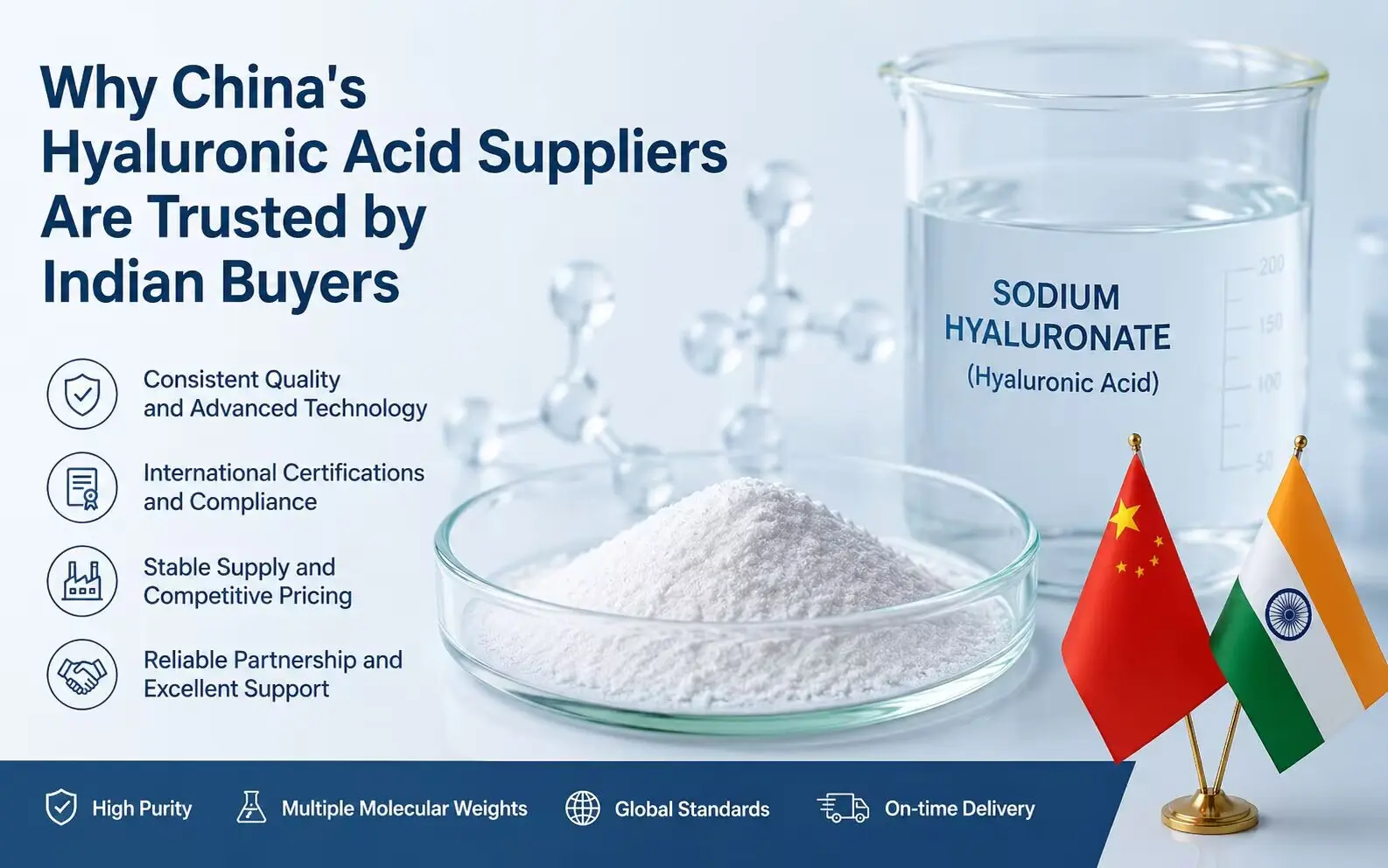
Chinese Hyaluronic Acid Suppliers Indian Buyers

Why Chinese Hyaluronic Acid Suppliers Are Trusted by Indian Buyers

With the rapid development of India's cosmetics, pharmaceutical, and nutraceutical sectors, demand for high-grade sodium hyaluronate is growing. Discover the cost-performance and regulatory advantages driving Indian buyers to partner with Chinese manufacturers.

Read Full Report →
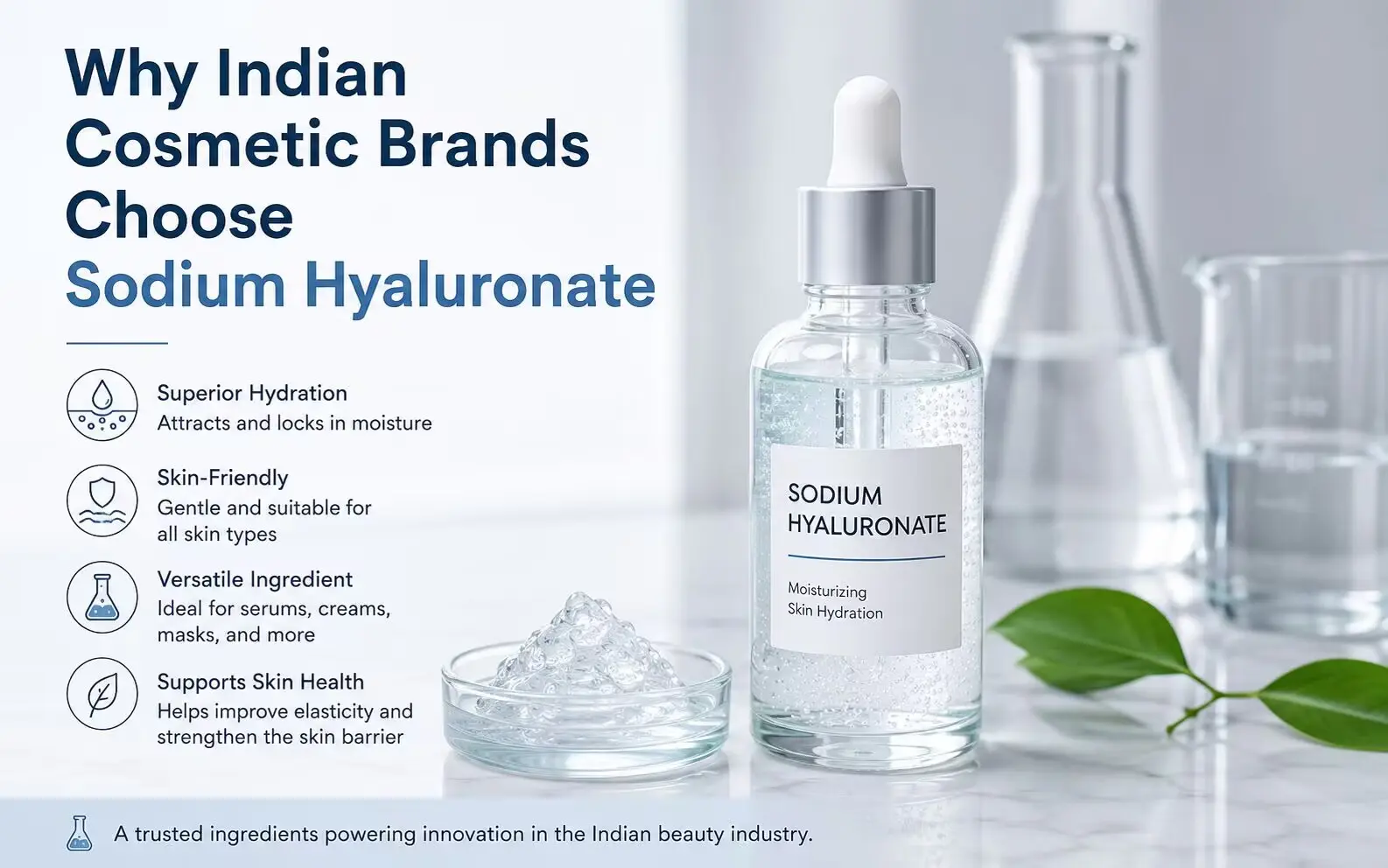
Indian Cosmetic Brands Choose Sodium Hyaluronate

Why Indian Cosmetic Brands Choose Sodium Hyaluronate

As the Indian beauty and personal care market premiumizes, consumers demand clinical-grade results. Sodium Hyaluronate has become the active of choice for formulations requiring verified hydrating performance.

Read Full Report →
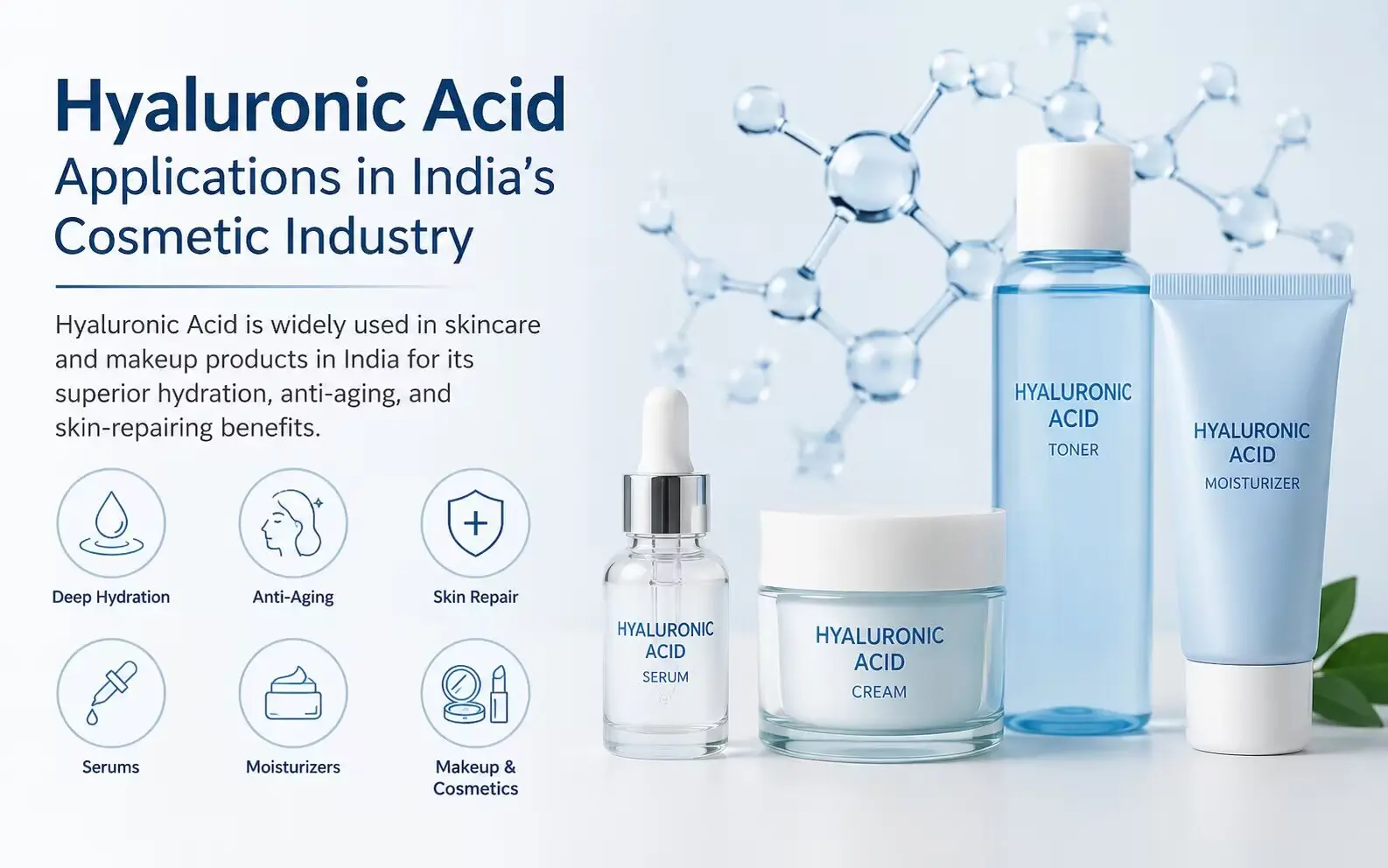
Hyaluronic Acid Applications India Cosmetic

Hyaluronic Acid Applications in India's Cosmetic Industry

Explore the application of diverse molecular weights of Hyaluronic Acid in serums, sheet masks, and sunscreens tailored specifically to high-humidity climates and South Asian skin typologies.

Read Full Report →

Strategic Procurement & Formulation FAQ

Direct technical answers from our engineering and chemical procurement departments.

Q1: What is the optimal concentration ratio for a combined Niacinamide & Hyaluronic Acid serum?
For daily use cosmetics, the industry standard is 2% to 5% Niacinamide combined with 1% to 2% Sodium Hyaluronate (in powder form equivalent). For clinical or clinical-strength dermatological serums, Niacinamide can be elevated to 10%, but this requires a robust barrier protection agent to mitigate potential mild sensitization.
Q2: How does the molecular weight of Hyaluronic Acid impact the performance of the serum?
High Molecular Weight (HMW) HA (>1.8 MDa) stays on the skin surface, forming an occlusive barrier that prevents evaporation. Medium Molecular Weight (1.0 - 1.5 MDa) offers excellent texture and hydration retention, while Low Molecular Weight (LMW) HA (<100 kDa) or Hydrolyzed HA (<10 kDa) penetrates deep into the stratum corneum to assist inside-out hydration and stimulate endogenous HA production. We recommend a multi-weight (3D or 4D) HA strategy for premium serums.
Q3: How do you verify the purity and batch stability of your active ingredients?
Every batch of cosmetic ingredients is subjected to High-Performance Liquid Chromatography (HPLC) to verify active ingredient percentages. We also utilize Infrared Spectroscopy (IR) for identity verification, and Inductively Coupled Plasma Mass Spectrometry (ICP-MS) for heavy metal trace analysis. All certificates of analysis (COA) are provided with shipping documentation.
Q4: What is the shelf life and storage protocol for bulk Niacinamide and HA powder?
When stored in their original, unopened containers in a dry, cool environment (temperatures below 25°C, relative humidity under 60%), both Niacinamide and Hyaluronic Acid powders have a shelf life of 24 months. Because Hyaluronic Acid is highly hygroscopic, it must be stored in double-layered polyethylene bags within fiber drums to prevent clumping.
Q5: Do your raw materials comply with the standards for vegan and cruelty-free claims?
Yes. Our Sodium Hyaluronate is produced through microbial fermentation, using non-animal starter cultures, and our Niacinamide is synthesized purely via chemical synthesis. There are no animal derivatives involved in any stage of the production process, fulfilling all standards for Vegan, Halal, and Cruelty-Free certification claims.
Q6: Can you provide customized solutions for specialized cosmetic or food brands?
Absolutely. Our R&D team works closely with brands to produce tailored molecular weight distribution curves, specialized pre-dissolved solutions (e.g. 1% Sodium Hyaluronate solutions for direct formulation), and customized blends including other active compounds like Arbutin, Coenzyme Q10, or Vitamin C derivatives.

Specialty Active & Functional Ingredients

High-efficacy, non-animal origin derivatives for specialized personal care, nutraceutical, and aesthetic applications.
Non-GMO Hyaluronic Acid Powder Nutraceutical Ingredient

Famous Non-GMO Hyaluronic Acid Powder Nutraceutical Ingredient

View Technical Spec Sheet
Edible Safety Grade Hyaluronic Acid White Powder

China Edible Safety Grade Hyaluronic Acid White Powder

View Technical Spec Sheet
Cross-linked Hyaluronic Acid Filler for Professional Use

Cross-linked Hyaluronic Acid Filler for Professional Use

View Technical Spec Sheet
4D Multiple Sodium Hyaluronate Solution

High-Quality 4D Multiple Sodium Hyaluronate Solution

View Technical Spec Sheet
Food Ingredient Short-chain Sodium Hyaluronate Powder

Food Ingredient Short-chain Sodium Hyaluronate Powder

View Technical Spec Sheet
Cosmetic Grade Hydrolyzed Sodium Hyaluronate CAS No 9067-32-7

Cosmetic Grade Hydrolyzed Sodium Hyaluronate CAS No 9067-32-7

View Technical Spec Sheet
Sterile Hyaluronic Acid Powder for Ophthalmic Use

China Sterile Hyaluronic Acid Powder for Ophthalmic Use

View Technical Spec Sheet
Microbial Fermentation Hyaluronic Acid Powder Food Ingredient

Microbial Fermentation Hyaluronic Acid Powder Food Ingredient

View Technical Spec Sheet
Partner Logo 1 Partner Logo 2 Partner Logo 3 Partner Logo 4 Partner Logo 5