Highly customized molecular fractions delivering superior bioavailability, safety, and physical properties.
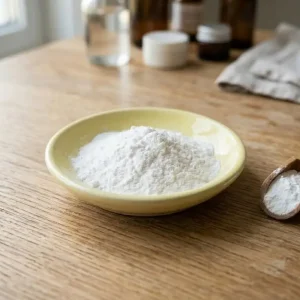
In modern personal care and medical biopharmaceuticals, the utility of regular Sodium Hyaluronate is frequently limited by its high molecular weight. Standard macromolecules (>1,000 kDa) act exclusively as surface moisturizers, incapable of permeating the skin's lipid barrier. To overcome this limitation, global research has shifted toward Super Low Molecular Weight Hyaluronic Acid (SLMW-HA), typically defined as fractions under 10,000 Daltons (10 kDa), and often specifically targetting the Oligomeric scale of 3,000 to 5,000 Daltons.
Production methodologies have transitioned from historical thermal acid hydrolysis—which yields fragmented, high-dispersity polymers with low structural consistency—to precise enzymatic degradation and advanced bio-fermentation processes. Utilizing modern enzyme-cleaving technology, Chinese bio-manufacturers control the enzymatic hydrolysis of Streptococcus zooepidemicus broths to terminate molecules at exact targets (e.g., 3 kDa, 5 kDa, or 10 kDa). This guarantees a narrow Polydispersity Index (PDI), optimizing the raw material's performance profile in formulation matrices.
Clinical data confirms that SLMW-HA functions not merely as an exogenous moisture binding agent, but as an active cell messenger. Upon entering the viable epidermis and dermis, SLMW-HA binds to CD44 receptors, stimulating the transcription of HA Synthase-2 (HAS-2) in dermal fibroblasts. This results in the natural production of endogenous High Molecular Weight Hyaluronic Acid, creating a dual-action plumping effect from within. It also strengthens intercellular tight junctions, optimizing skin barrier functions against environmental stressors.
Mapping the transition of anti-aging, therapeutic, and delivery vehicle markets worldwide.
Medical cosmetic brands are rapidly substituting standard moisturizing humectants with SLMW-HA. Its unique ability to penetrate deep skin layers makes it an exceptional active carrier for biological peptides, vitamins, and brightening actives, maximizing formulation efficacy.
Modern consumers demand absolute safety. The market has shifted from animal-derived sources (avian combs) to non-GMO, vegan-friendly microbial fermentation. The focus is on producing highly purified, heavy-metal-free, and allergen-free cosmetic and food ingredients.
Oral supplements are evolving beyond standard vitamins. Dietary supplements containing Oligomeric HA are highly sought after in regions like North America, Western Europe, and Asia-Pacific due to their high gut absorption rates and dual systemic benefits for skin and joints.
B2B procurement of cosmetic and pharmaceutical raw materials demands absolute consistency. Procurement officers, formulation chemists, and quality assurance leads evaluate suppliers based on key chemical parameters rather than marketing claims. To secure market leadership, a premium Super Low Molecular Weight Hyaluronic Acid manufacturer must consistently meet these strict technical specifications:
Leveraging automated smart bio-fermentation to drive global cost efficiency, consistency, and supply stability.
Suzhou Wanfukang Chemical Co., Ltd. (WFK Chem) leverages China's advanced biological production infrastructure to provide unmatched supply stability. Our Factory 4.0 utilizes fully closed, automated fermenters with real-time tracking of pH, dissolved oxygen (DO), temperature, and feed rates. This strict monitoring guarantees consistent quality and yields for every fermentation batch.
This localized cluster-based supply chain integrates upstream sugar source processing with downstream purification and logistics. It insulates international buyers from global supply shocks, minimizes raw material transport costs, and shortens production lead times compared to western suppliers. WFK Chem balances environmental sustainability with scale, using green energy and efficient water recycling to support ecological practices.
Engineered performance profiles optimized for cosmetic, pharmaceutical, and nutritional products.
SLMW-HA delivers rapid deep hydration, smoothing fine lines and plumping the skin's matrix. It is highly compatible with niacinamide, arbutin, and vitamin C formulations, optimizing skin brightening and anti-aging synergies.
Low molecular weight fractions have excellent viscoelastic properties, stabilizing the tear film while encouraging corneal epithelial healing. This makes it an ideal raw material for premium, long-lasting dry eye drop applications.
Oral Oligo-HA enters systemic circulation through intestinal absorption, directing key components back to articular joints and skin layers. This helps restore synovial fluids and improves overall mobility and skin health.
Answering standard technical questions regarding Super Low Molecular Weight Sodium Hyaluronate.
Targeted active ingredients designed for modern injectable, cosmetic, and functional food products.
Keeping our global clients informed on formulation breakthroughs, regulatory trends, and supply chain developments.
India's beauty and wellness industries are growing rapidly. To meet demand, Indian buyers rely heavily on Chinese suppliers for high-quality, cost-effective cosmetic, food, and pharmaceutical grade hyaluronic acid.
Indian cosmetic brands are incorporating Sodium Hyaluronate into their premium skincare lines. Its excellent moisturizing capability, compatibility, and safety profile make it an essential active ingredient.
Examining the diverse applications of Hyaluronic Acid, from light daily moisturizers to intense skin-repairing products, driving growth in local cosmetic formulations.