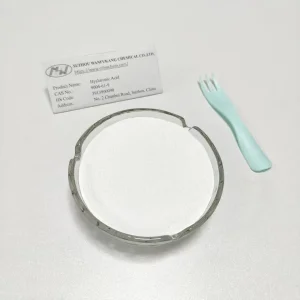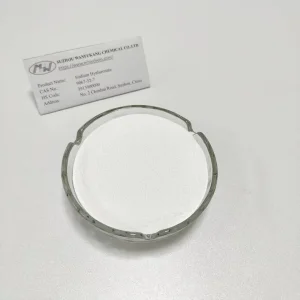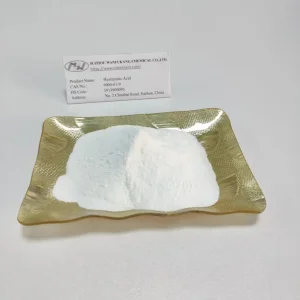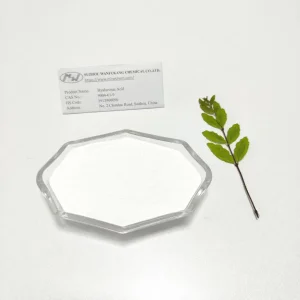
Explore our high-performance molecular distributions engineered for transdermal delivery and deep-cellular hydration.
As an industry-leading Chinese exporter and manufacturer, our scientific approach focuses on the molecular precision of sodium hyaluronate. Traditional high-molecular-weight Hyaluronic Acid (HA) forms a protective moisture barrier on the surface of the stratum corneum but cannot penetrate the skin matrix due to its large molecular size (typically 1.0 to 2.2 Million Daltons).
Hydrolyzed Hyaluronic Acid is obtained via enzymatic degradation of high molecular weight sodium hyaluronate using a proprietary biological process. This cuts the polysaccharide chains into oligomers without altering the chemical ring structures, yielding ultra-low molecular weights (ranging from under 3 kDa to 50 kDa). At this size, the molecules penetrate deeply into the epidermis, facilitating cellular hydration, regulating inflammatory responses, and stimulating collagen production from within.
| Hyaluronic Acid Molecular Grade | Average Molecular Weight Range (Daltons) | Primary Physiological Target | Main Formulation Benefit |
|---|---|---|---|
| Oligo / Hydrolyzed HA | < 10,000 Da (10 kDa) | Deep Dermis & Epidermis | Stimulates collagen generation, deep hydration, repairing damaged cell tissues. |
| Low Molecular Weight HA | 10,000 - 100,000 Da | Middle Epidermal Layers | Improves intercellular junctions, delivers long-lasting internal hydration. |
| Medium Molecular Weight HA | 100,000 - 1,000,000 Da | Outer Stratum Corneum | Balances moisture barrier function, improves formulation viscosity. |
| High Molecular Weight HA | > 1,000,000 Da (1.0 MDa) | Surface Layer Film Form | Creates immediate breathable protective barrier against environmental aggressors. |
Leveraging state-of-the-art bio-fermentation, Wanfukang guarantees scaling efficiency, raw material purity, and uninterrupted global supply.
Suzhou Wanfukang Chemical Co., Ltd. is a specialized supplier of Sodium Hyaluronate and Hydrolyzed Hyaluronic Acid. By standardizing biological fermentation routes using non-GMO, vegan substrates, our Chinese factory ensures the highest grade inputs. With robust raw material sourcing capabilities and automated industrial processing plants, we support high-capacity logistics pathways, guaranteeing consistent batch quality and short lead times.
Aligning raw material purity and documentation parameters to meet international regulatory standards for cosmetics and pharmaceuticals.
For skincare formulators, our Hydrolyzed Hyaluronic Acid meets strict cosmetic safety standard criteria globally (including US FDA, EU Cosmetics Regulation, and NMPA). It is 100% free of animal-derived components, reducing biological risks and maintaining a clean label profile for high-end luxury products.
Suitable for joint and skin supplements, our oral-grade Hydrolyzed HA complies with GRAS standards and international food sanitation parameters. It has superior gastric fluid stability, allowing the active ingredients to bypass gastrointestinal digestion for efficient intestinal absorption.
Engineered under GMP-certified systems, our injection-grade and eye-drop-grade HA fractions are purified with strict control over bioburden, nucleic acids, and endotoxin levels. Perfect for dermal fillers, intra-articular injections, and ophthalmic formulations.
How our global clients utilize different grades of Hydrolyzed Hyaluronic Acid across cosmetics, wellness products, and medicine.
In deep hydrating topical serums, low molecular weight Hydrolyzed HA reduces wrinkle depth and increases skin elasticity. Formulators typically mix it with medium and high molecular weight sodium hyaluronate (multi-HA complex solutions) to achieve multi-layer hydration.
Recommended Concentration: 0.1% - 1.0%For oral beauty drinks and dietary supplements, food-grade Hydrolyzed HA works synergistically with collagen peptides and Vitamin C to stimulate joint synovial fluid synthesis, promoting skin density and joint mobility from the inside.
Recommended Concentration: 40mg - 120mg Daily DoseNon-animal-derived eye drop grade sodium hyaluronate plays a crucial role in managing dry eye syndrome. Its viscoelastic properties provide long-lasting tear film stability on the corneal surface, reducing mechanical friction.
Recommended Concentration: 0.1% - 0.3%Insights into the increasing demand for Chinese bio-chemical exports in key international hubs.
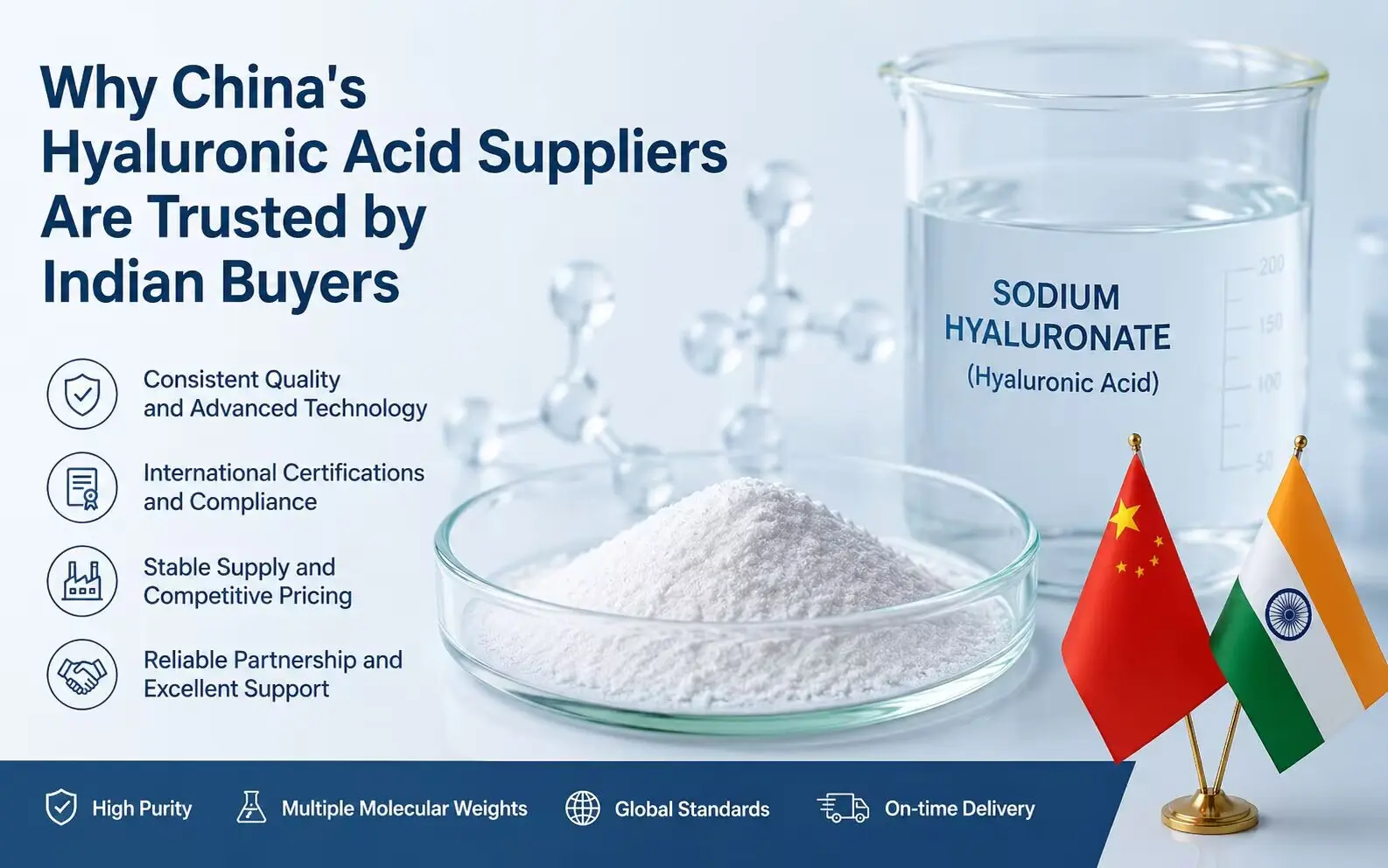
In recent years, with the rapid development of India's cosmetics, pharmaceutical, and food and health product industries, the market demand for hyaluronic acid (HA) and sodium hyaluronate has continued to grow. Against this backdrop, more and more Indian buyers are turning their attention to Chinese suppliers. So, why have Chinese hyaluronic acid suppliers won the long-term trust of Indian buyers?
Read Details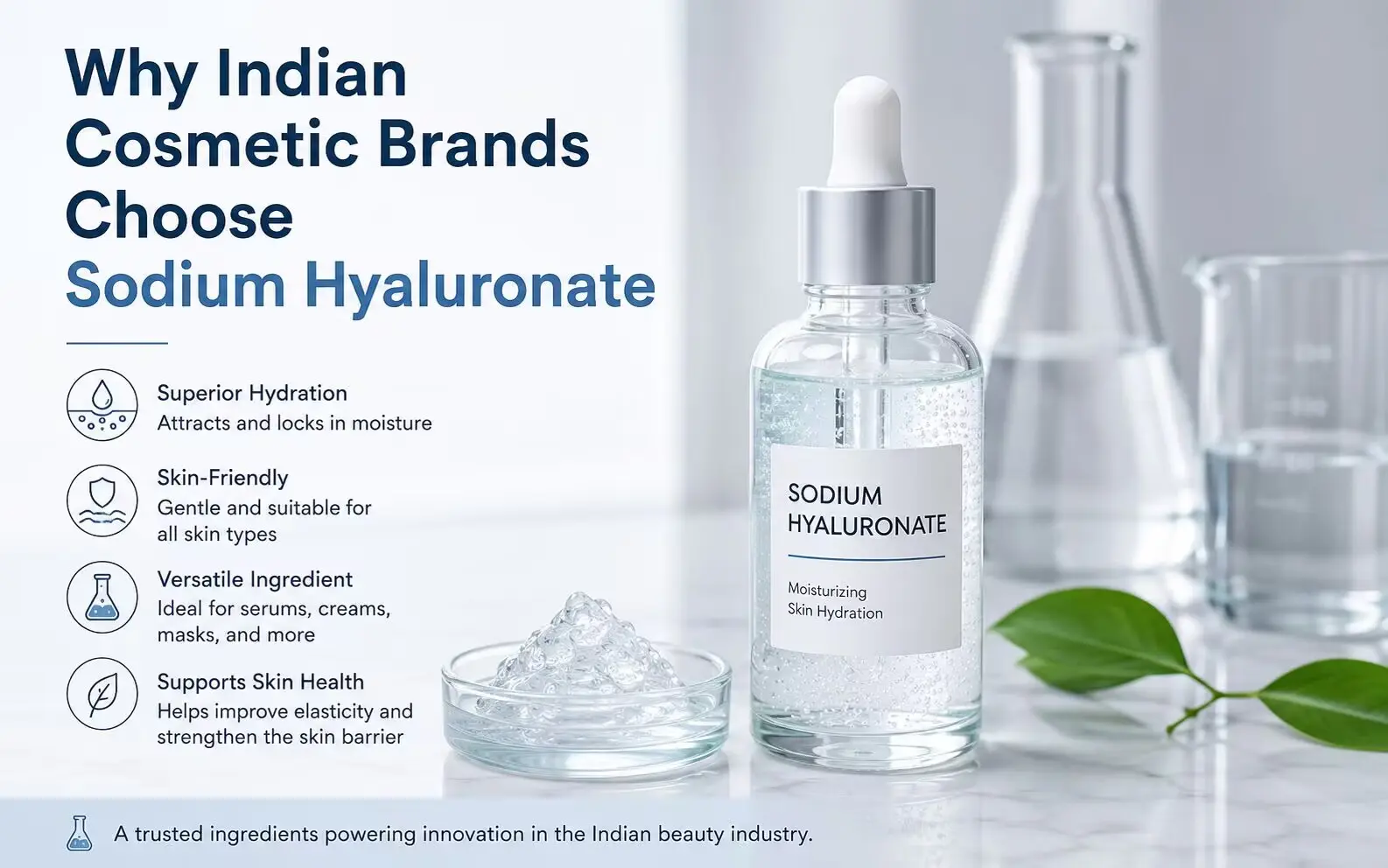
In recent years, with the continued growth of the Indian beauty and personal care market, consumers' demand for highly effective and safe skincare products has been constantly increasing. As a widely used moisturizing ingredient in the international market, sodium hyaluronate is becoming an important choice for more and more Indian cosmetic brands, and is widely used in serums, creams, masks, sunscreens, and makeup.
Read Details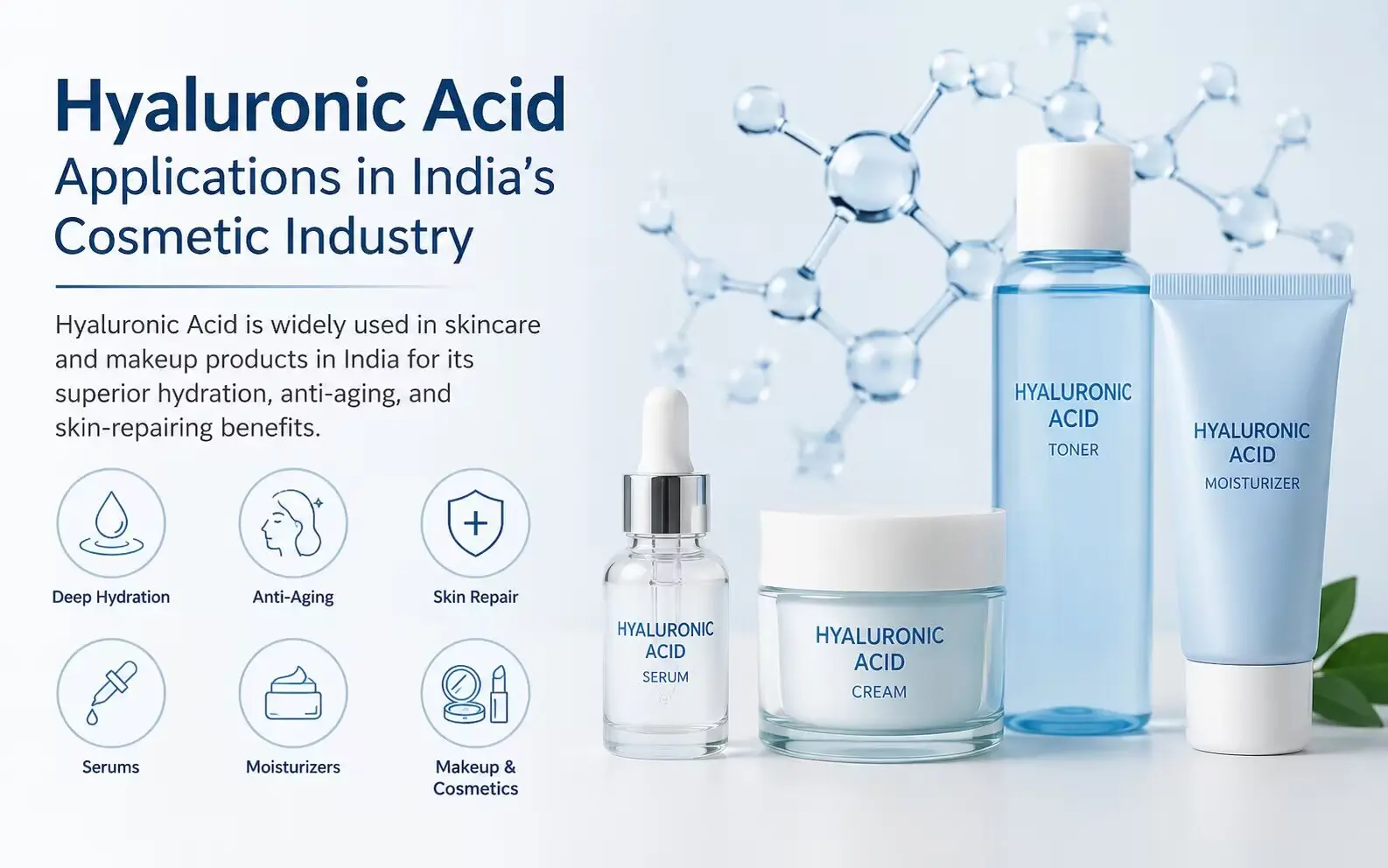
With the continued expansion of the Indian cosmetics market and the growing consumer demand for high-quality skincare products, hyaluronic acid (HA) is gradually becoming one of the most watched functional ingredients in the Indian cosmetics industry.
Read DetailsWanfukang specializing in the development and export of cosmetic and food ingredients.


Detailed technical answers addressing standard inquiries from global B2B procurement managers and formulators.
Standard Sodium Hyaluronate consists of very high molecular weight polymer chains (usually > 1.0 MDa) which cannot pass the skin barrier. Hydrolyzed Hyaluronic Acid is chemically cut down into oligomers (< 10 kDa) using a targeted biological enzyme cutting technique. While standard HA forms a skin film surface barrier, Hydrolyzed HA acts inside the epidermis to rebuild structural moisture reserves.
No. Our Hydrolyzed Hyaluronic Acid and Sodium Hyaluronate raw powders are produced strictly through microbial fermentation (utilizing non-GMO bacterial strains such as Streptococcus zooepidemicus) on plant-derived media. This ensures that the material is 100% vegan-friendly and free from bovine, poultry, or other animal diseases.
As a professional manufacturer and exporter, Suzhou Wanfukang Chemical Co., Ltd. provides full regulatory packages. This includes Certificate of Analysis (COA), Safety Data Sheets (SDS), Technical Data Sheets (TDS), Allergen Statements, Non-GMO declarations, and BSE/TSE-free certificates. We also maintain ISO9001 and GMP manufacturing systems.
High molecular weight HA generates highly viscous hydrogels even at low concentration limits, which can be prone to shearing instability. Conversely, low molecular weight Hydrolyzed HA does not significantly increase formulation viscosity. This allows formulators to use higher concentrations without compromising texture, stickiness, or skin-feel.
Our standard MOQ for specialized powders begins at 1kg, making it highly accessible for both boutique cosmetic R&D setups and macro industrial clients. Standard shipping lead times range from 7 to 15 working days post-payment validation, depending on destination port and logistics routing requirements.
Connecting supply routes across Europe, North America, India, and East Asia.

Maximize efficacy with targeted applications utilizing our optimized, non-animal derived raw material portfolio.